
Table of Contents
Visiting Museums: Introduction
Museums in 2026 operate at the intersection of culture, tourism, economics, and attention. A visit is no longer a casual walk through quiet halls. It is an encounter with scale, density, architectural complexity, and concentrated public interest around a small number of major works.
Large institutions receive millions of visitors annually. Flagship works draw sustained attention, temporary exhibitions reshape traffic, and timed-entry systems regulate arrival. The result is an environment that rewards preparation and steady pacing.
This guide approaches museums with a practical focus. A successful visit depends on clear purpose, realistic time limits, thoughtful movement, and controlled pacing. When these elements are consistent, the museum becomes navigable rather than overwhelming.
Defining the Visit Objective
A museum visit without a clear objective tends to follow crowd behavior. Visitors follow visible clusters, drift toward familiar names, and often leave with shallow recall.
Before arrival, define the primary intent. Is the goal to encounter a single flagship work? To study a defined theme? To understand a historical period? To observe architecture? To accompany others? To conduct focused research?
A visit cannot optimize all goals simultaneously. Attempting to maximize exposure, depth, and atmosphere within one session creates an internal contradiction.
Time must also be fixed in advance. A ninety-minute visit requires precision. A three-hour visit allows selective immersion. A half-day requires planned pauses. A full day demands careful pacing and reduced ambition in later hours. Multi-day visits allow thematic or wing division.
Finally, choose between depth and coverage. Coverage increases exposure. Depth increases retention. Attempting both reduces both.
For a structured breakdown of motivations and visit types, refer to ‘Museum Visit: Goals and Styles‘ and ‘Visiting a Museum: 10 Common Goals‘. They outline how different intentions shape movement and time allocation inside large institutions.
Choosing Your Visit Style
Style defines how the objective is carried out.
The Structured Route visitor selects works in advance, defines a wing sequence, and limits cross-building movement. This reduces decision fatigue in large institutions.
The Thematic Explorer filters the collection through a concept such as portraiture, mythology, or power. This produces intellectual continuity, though it may increase walking distance.
The Flagship-Focused visitor prioritizes anchor works. This approach suits strict time limits but concentrates exposure to dense areas.
The Spatial Drifter moves according to architectural cues and atmosphere. This reduces pressure but risks missing institutional anchors.
The No-Planning visitor accepts unpredictability and allows discovery to shape the visit. This works best when time tolerance is high and expectations are modest.
Style should support the objective and available time.
For a practical contrast between structured and deliberately unstructured approaches, see Museum Visit: The “Must-Not-See” Visitor.
Planning: From Minimal to Detailed
Planning exists within a range.
Minimal preparation includes confirming opening hours, ticket policies, and temporary closures. Most major institutions now operate timed-entry systems, which influence arrival patterns and density.
More detailed preparation may involve selecting a single wing or floor and limiting cross-building transitions. In encyclopedic museums, repeated switching between distant sections quickly produces fatigue.
Planning becomes counterproductive when it turns into endless research. Many visits are postponed because the plan feels incomplete. A workable plan is better than a perfect one.
For practical preparation steps, see Plan Your Museum Visit: A Practical Guide. If you are unsure whether planning truly matters, Visiting a Museum: 10 Reasons Why a Simple Plan Matters explains how modest preparation prevents fatigue without removing spontaneity.
Planning should clarify the visit, not delay it.
Inside the Museum: Execution
Execution begins at the entrance.
Pause to orient yourself. Identify wings, vertical circulation, temporary exhibition locations, and exit routes before moving toward a major work.
Commit to a clear movement pattern. Complete a wing before switching floors. Avoid repeated cross-building transitions unless your objective requires it. Fragmented movement increases walking distance and reduces recall.
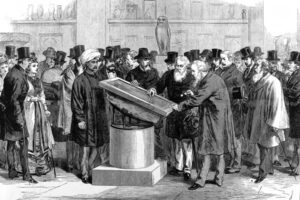
Integrate flagships deliberately. For example, the Mona Lisa at the Louvre Museum regularly reshapes traffic across adjacent galleries. In the Vatican Museums, visitor flow compresses toward the Sistine Chapel near the end of the route. At the British Museum, the Rosetta Stone functions as an early gravitational point close to the entrance. Understanding these anchors helps you decide whether to approach immediately or return later.
Attention declines after sustained viewing. Most visitors lose focus after forty-five to sixty minutes of continuous standing and reading. A short seated pause restores clarity more effectively than pushing forward through fatigue.
Divide the visit into parts rather than treating it as one continuous stretch. Short resets protect retention.
Duration Strategy
Time defines how the visit should be structured.
A ninety-minute visit should focus on one section and, if necessary, one flagship work.
A three-hour visit supports two defined sections separated by a short break.
A half-day visit should be divided into blocks separated by rest. Continuous exposure reduces memory retention.
A full-day visit requires longer breaks and reduced ambition in later hours. More time does not justify attempting full coverage.
If return visits are possible, divide the museum by wing, period, or theme across separate days.
Crowd Intelligence
Crowd density reshapes experience.
Late mornings, weekends, and holidays are typically busiest. Weekday openings and late afternoons often provide more space. Temporary exhibitions create localized bottlenecks that spill into adjacent galleries. School groups frequently cluster mid-morning.
When congestion rises, adjust calmly. Shift floors. Visit a quieter wing. Return later to a dense gallery.
Crowd movement is a signal. It should inform your decisions, not control them.
Looking at Art More Effectively
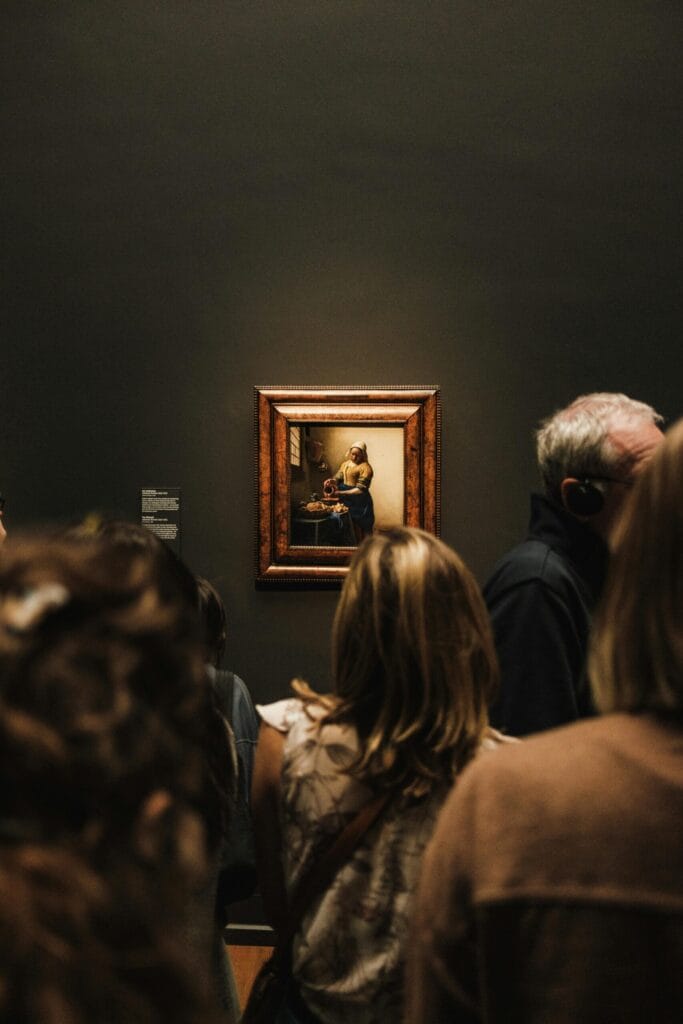
Most visitors spend only seconds in front of each artwork. Slowing down improves retention.
Observe first. Notice composition, light, and spatial relationships. Then read selectively. Then look again.
Avoid reading every wall text. Select what supports your stated aim.
When impatience appears, or scanning replaces attention, pause. Fatigue reduces the value of what follows.
Leaving with two or three clearly remembered works is a stronger outcome than vague recall of dozens.
Access and Ticket Systems
Timed-entry tickets are now standard in many major institutions. Arriving within your assigned window reduces friction at the entrance.
Membership models can make sense for local visitors or multi-day trips. Free-entry periods reduce cost but often increase density.
Blockbuster exhibitions generate concentrated traffic and may require separate planning from the permanent collection.
Understanding these systems prevents unrealistic expectations about waiting times and movement.
Major Museum Profiles
Institutional scale determines preparation intensity.
The Metropolitan Museum of Art benefits from committing to a single department, such as European paintings or Egyptian art, rather than moving repeatedly across distant wings.
The Museo del Prado offers a more concentrated layout, where Velázquez and Goya can be approached within adjacent rooms, allowing thematic focus with limited cross-building movement.
Sequential institutions such as the Vatican Museums require endurance pacing and awareness of bottlenecks near their culminating galleries. Radial institutions like the British Museum allow outward movement from a central hub.
Layout influences effort.
Common Mistakes
Trying to see everything.
Ignoring the map.
Following crowds without reflection.
Skipping breaks.
Overplanning and postponing the visit entirely.
Clear boundaries and modest ambition protect the experience.
Museum Visit
A museum visit does not need to be exhaustive.
Define the goal. Choose how you will move. Plan clearly. Adjust to crowds. Rest before fatigue. Leave with memory rather than exhaustion.
Museums are large public institutions shaped by scale and attention. They reward steady structure more than speed.
Return with a new purpose rather than attempting to complete the building in a single day.