
Table of Contents
The Planned Museum Visit
Most visitors do not enter a museum without direction.
They arrive with a plan or quickly adopt one before taking more than a few steps inside. A map is opened, a highlights list is checked, or a recommended route is followed. Certain artworks are already waiting in the mind long before they appear in the gallery.
The modern museum visit has gradually organized itself around expectation. Seeing specific works becomes the structure of the day. Movement through the building is shaped less by curiosity and more by destinations.
The Desire to See Something Known
For many visitors, part of the pleasure lies in encountering something familiar. A painting seen in books or online finally appears at real scale. Recognition brings satisfaction. The visit feels anchored by moments already imagined.
Seeing at least one known work reassures the visitor that the journey had a clear purpose.
The Planner’s Mindset
For some visitors, planning is not pressure but preference. Preparation brings comfort. Researching beforehand, selecting priorities, and organising time create a sense of control.
This approach reflects a practical mindset shaped by efficiency and effectiveness. Time is treated as a resource to be used well. The visit becomes something to organise rather than to leave to chance.
The Influence of Tour Operators
Planning is often guided from the outside. Tour operators design efficient routes that promise coverage within a limited time. Groups move from one recognised work to another, stopping briefly before continuing onwards.
The museum becomes a sequence of confirmed stops, shaped by logistics as much as by interest.
The Museum’s Own Guidance
Museums also shape movement internally. Maps highlight key works. Signage directs visitors toward famous galleries. Audio guides and official routes organise attention around selected objects.
These systems help visitors navigate large collections, but they also reinforce the idea that certain artworks define a successful visit.
The “10 Must-See” Rush
Alongside tours and institutional guidance, a constant stream of lists defines what matters. “Top highlights.” “Ten masterpieces.” “Do not miss.” Websites, guidebooks, and social media repeat the same selections until they feel mandatory.
Visitors arrive already carrying these priorities. Attention narrows toward a small number of famous works, while much of the museum quietly disappears into the background.
The Sunk Cost of the Visit
Museum visits often require effort and expense. Travel, tickets, queues, and limited time create a quiet pressure to make the visit count.
Inside, visitors try to justify that investment. Missing the famous works can feel like losing value. The checklist becomes proof that the visit was worthwhile.
The result is a visit organised around certainty, efficiency, and completion.
The Must-Not-See Visitor
Entering Without a Plan
Some visitors arrive without a route, without a highlights list, and without a decision about what must be seen. They do not avoid famous artworks, nor do they seek them deliberately. They simply begin walking.
Choices are made moment by moment. A crowded gallery may be skipped. A quiet room may hold attention longer than expected. The visit forms gradually instead of being decided in advance.
The museum becomes a place to move through rather than a sequence of targets.
Following the Moment
Without a fixed path, movement becomes simple. Visitors walk, pause, look, and continue when interest fades.
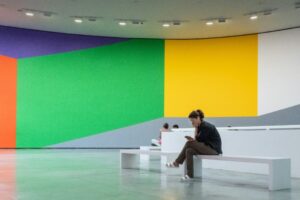
There is no required pace. Sitting, resting, or observing the space itself becomes part of the experience. Architecture, light, and silence share attention with the artworks.
The visit starts to resemble a walk rather than a task.
No Fear of Missing
One of the strongest benefits of this approach is psychological. Nothing specific was required, so nothing feels lost.
Famous masterpieces remain welcome stops, but they are no longer obligations. Attention opens naturally, allowing unexpected encounters without pressure. In museums on the scale of the Louvre — where nearly 35,000 artworks are on display at any given time, only a fraction of the total collection — completeness is never really possible anyway. Accepting this transforms the visit from a checklist into a genuine experience of discovery (see the Louvre collections overview)
Less Fatigue
Planned visits often create exhaustion through constant navigation and decision-making. An unplanned visit reduces that strain.
Visitors change direction easily, rest when needed, and leave when energy fades. The museum adapts to the visitor’s rhythm.
No Pressure to Finish
There is no need to complete the museum. Rooms left unseen do not feel like failure.
The visit ends naturally, guided by comfort rather than achievement. Satisfaction comes from the experience itself, not from coverage.
No Costly Add-Ons
This style also changes the financial side of a museum visit.
Without guided tours, scheduled routes, or paid audio programs, the experience remains simple. Visitors move at their own pace without feeling the need to purchase structure or interpretation in advance.
The museum becomes accessible without additional spending. Time replaces scheduling, and curiosity replaces instruction.
For many visitors, this removes another layer of pressure. The visit no longer needs to justify extra cost, only the time spent inside.
Peak Efficiency
In its own way, this may be the most efficient way to visit a museum.
The schedule is decided by the body rather than a map. When energy is high, the visit continues. When the back begins to complain, the route naturally shortens. No calculation is required.
Instead of trying to optimise the museum, the visitor simply follows physical comfort. The visit ends at exactly the right moment, neither rushed nor overextended.
Efficiency is measured not in artworks seen but in how long the legs agree to keep walking.
A Simpler Way to Enjoy the Museum
Without schedules, tours, or strict timing, the visit feels lighter. Money is not spent on guided routes, and attention is not divided between instructions and observation.
The museum becomes what it physically is: a space open to wandering and personal pace.
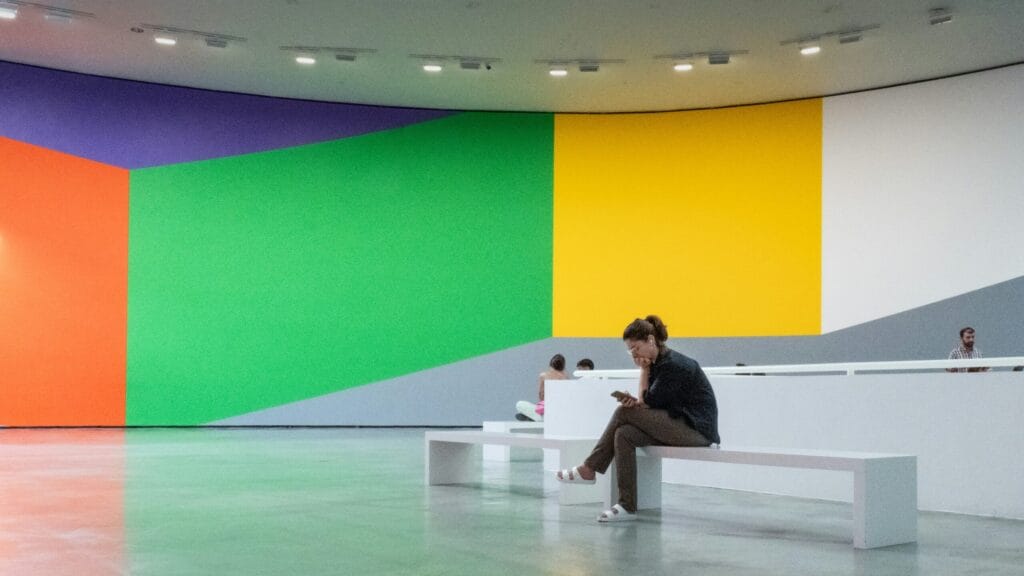
Free Walk
This kind of visit rarely ends with a sense of completion, and it does not need to.
Nothing was required, so nothing feels missed. The museum is left when energy fades, not when a list is finished. Some rooms remain unseen, and that is part of the experience.
What stays is not a record of artworks, but the memory of moving freely, at one’s own pace, through a space meant simply for looking.
More Details on Visiting Guide: Explore Visiting Museums: A Comprehensive Guide for 2026