
Table of Contents
Overview: Pastoral Hymn of Love and Innocence
Painted around 1878, The Shulamite: Pastoral Scene with Lambs by John Roddam Spencer Stanhope reflects the serenity and symbolic beauty of the late Pre-Raphaelite movement. Drawing inspiration from the Song of Songs, Stanhope envisions the Shulamite maiden as a figure of innocence and devotion, wandering through a sunlit Tuscan landscape with a lamb in her arms and an olive branch extended in peace.
The scene merges biblical tenderness with pastoral calm. Shepherds and maidens move gently among cypress trees, their quiet tasks woven into the harmony of nature. Light and color unite earth and spirit, bathing the figures in golden stillness.
Through its tranquil rhythm and luminous detail, the painting reveals Stanhope’s belief that divine truth could be found in beauty itself — in humble gestures, living nature, and the enduring dialogue between love, faith, and peace.
Artist
John Roddam Spencer Stanhope (1829 – 1908) was an English painter closely associated with the second wave of Pre-Raphaelitism. A student of George Frederic Watts and a friend of Edward Burne-Jones, he developed a style that blended classical composition with mystical themes. Living much of his life in Florence, he absorbed the golden tones of Italian light, which softened the sharp edges of his early work. Stanhope’s paintings often depict allegorical women, biblical legends, and moral narratives expressed through gentle gesture and symbol.
The Story Behind the Painting
The Biblical Song of Songs
The Shulamite is one of the most beloved figures in biblical poetry — a young woman who searches for her beloved through fields and gardens. Her voice is the voice of longing and purity, echoing the timeless human desire for love that is faithful and divine. Stanhope transforms this ancient poem into a visual hymn: not a dramatic moment, but a quiet meditation on grace.
Setting and Symbolism
The lush Tuscan setting serves as a metaphor for the Garden of Solomon — where every tree, shepherd, and stream represents harmony between spirit and earth. The lamb in the Shulamite’s arms suggests innocence and sacrifice, while the olive branch she extends symbolizes peace and reconciliation. Each figure around her — the shepherd at the well, the maid spinning thread — echoes themes of labor, devotion, and faith in daily life.
Composition and Subjects
The Central Figure
Stanhope places the Shulamite at the heart of the painting, her graceful pose and downcast eyes drawing attention to her inner calm. She is draped in earthy green and crimson, colors that symbolize fertility and love. The lamb in her arms is painted with a soft luminosity that reflects her purity.
The Pastoral Setting
Behind her, a quiet landscape unfolds in balanced perspective. Groups of shepherds and maidens carry out their daily tasks — gathering water, feeding flocks, tending trees. Stanhope’s careful arrangement of figures creates a rhythm of movement that guides the eye through the forest of cypresses toward the hills beyond.
Light and Tone
The golden Tuscan light gives the scene its transcendent warmth. Subtle contrasts of sunlight and shadow on the tree trunks create depth without losing the painting’s tranquil unity. Stanhope’s use of pale greens, rose, and cream tones enhances the mood of innocence and reverence.
Art Style and Techniques
Pre-Raphaelite Detail and Symbolism
Stanhope’s technique reflects the Pre-Raphaelite commitment to truth to nature. Each blade of grass and fold of fabric is rendered with meticulous care. Yet the work is more than realism: it is a poem in color. The artist’s softened palette marks his mature period, moving toward a more spiritual, decorative beauty akin to Burne-Jones.
Technique and Medium
Oil on canvas, the painting shows Stanhope’s fluid brushwork and glazing techniques. He layered thin transparent tones to achieve luminosity, while retaining crisp outlines inspired by early Renaissance frescoes. The result is both solid and dreamlike — a hallmark of his Florentine years.
The Shepherd Maiden of Peace
Stanhope’s Shulamite is less a portrait than a prayer. It invites us to see beauty as something quiet and spiritual — found in the gentle tasks of life, the light through trees, and the tender act of caring for a lamb. In its poetic stillness, this painting remains one of the most peaceful expressions of the Pre-Raphaelite ideal of truth through love and nature reminding us that art can capture the eternal—faith, beauty, devotion—in a single, enduring image.
More About Artist
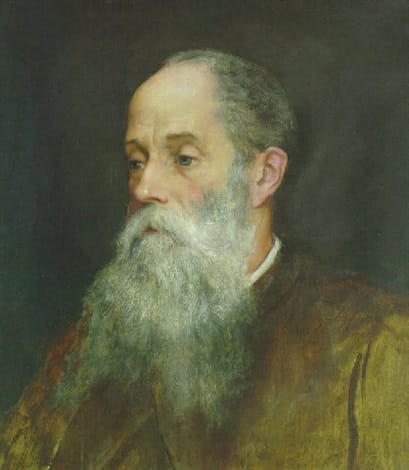
John Roddam Spencer Stanhope (January 20, 1829 – August 2, 1908) was an English artist associated with the second wave of the Pre-Raphaelite movement. Born into an aristocratic family in Cawthorne, Yorkshire, he was educated at Rugby School and Christ Church, Oxford. Despite his privileged background, Stanhope pursued a career in art, training under George Frederic Watts and traveling extensively, including trips to Italy and Asia Minor.
Artist Style and Movement
Stanhope’s work is typically classified within the later Pre-Raphaelite and Aesthetic movements of Victorian art. He worked across various media—oil, watercolor, fresco, tempera—and his subjects ranged from mythological and allegorical themes to biblical scenes and contemporary life. His early paintings featured highly original narrative compositions, which later evolved towards a more symbolic and aesthetic style influenced by broader Victorian artistic trends.
Artwork Profile
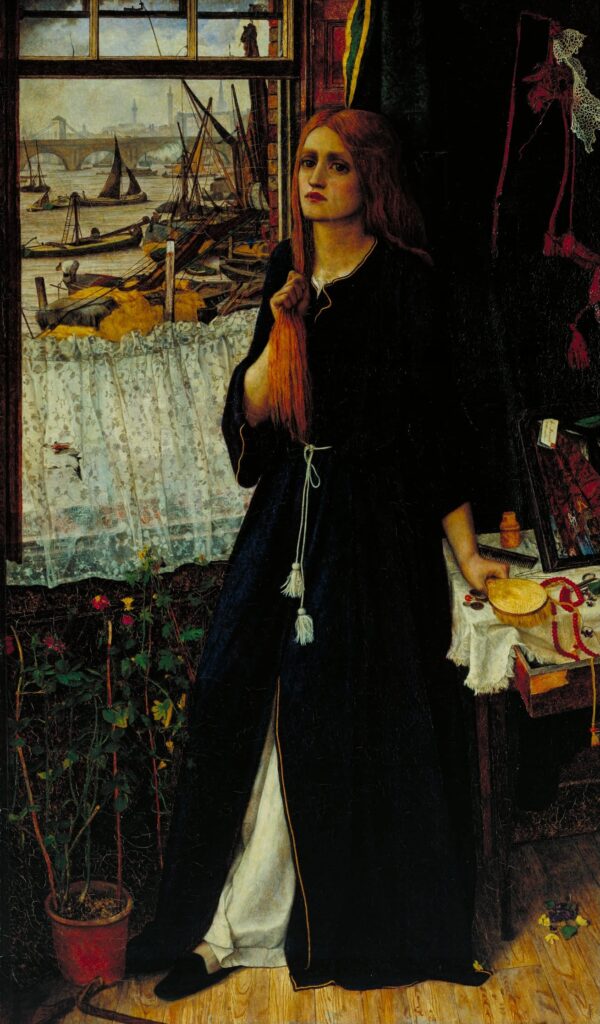
- Thoughts of the Past (1859), his first exhibited painting, depicting a contemplative woman by a window overlooking the Thames.
- The Shulamite: (Pastoral Scene with Lambs) (c. 1878), a serene and lyrical pastoral scene exemplifying his Pre-Raphaelite style.
- The Shulamite: (Bridal Procession) (c. 1882), depicting the procession with rich symbolism and ornate detail, continuing his Pre-Raphaelite themes.
- Penelope (1864), illustrating the faithful wife from Homeric legend in the detailed and expressive Pre-Raphaelite manner.
- Winnowing (c. 1880), portraying agricultural life with symbolic overtones typical of his narrative approach.
- Juliet and Her Nurse (c. 1860), a literary subject rich with emotional and dramatic qualities favored by Pre-Raphaelites.
- Why Seek ye the Living Among the Dead (1870–1899), a powerful biblical scene reflecting later symbolic and aesthetic tendencies.
- Love and the Maiden (1877), a romantic and allegorical composition showcasing his mature style.
- Charon and Psyche (1883), a mythological painting exploring themes of love and the afterlife.
- Pine Woods at Viareggio (1888), a landscape reflecting his time in Italy with delicate naturalism.
- The Gentle Music of a Bygone Day (1873), a nostalgic genre painting evoking memories and emotion.
- The Waters of Lethe by the Plains of Elysium (1880), a symbolic work referencing classical mythology and the afterlife.
John Roddam Spencer Stanhope’s artistic career reflects a rich engagement with the ideals of the Pre-Raphaelites, combined with a move towards aesthetic symbolism in later years. His work, characterized by technical skill and narrative depth, secured him a distinctive place in Victorian art history. Living much of his later life in Florence, he influenced subsequent artists including his niece Evelyn De Morgan, solidifying his legacy as a key figure bridging English Romanticism and Aestheticism.phasize classical virtue and patriotic sacrifice, reflecting the cultural ideals of his age.