
Table of Contents
Overview
Painted around 1750–1752, The Shepherdess captures the gentle world of Rococo grace at its most serene. A young woman, seated among flowers and sheep, weaves garlands beneath soft branches. Her pale blue skirt and golden drapery shimmer against the fresh greens of the landscape. The scene radiates peace — an artful pause between simplicity and refinement.
Jean-Honoré Fragonard, then in his early twenties, presents the countryside not as reality but as theatre: nature arranged for beauty’s sake, innocence dressed in silk. The painting offers a vision of life untouched by care, where time seems to drift as lightly as the blossoms at her feet.
In this single pastoral moment, the artist distills the Rococo spirit — graceful, playful, and quietly human.
The Shepherdess: A Daydream in the Countryside
Imagine a peaceful, sunny day far away from the noise of any busy town. The air is fresh, the grass is soft, and the only sounds are the gentle bleating of sheep and the whisper of leaves in the breeze. That’s the tranquil world Jean Honoré Fragonard invites us into with his charming painting The Shepherdess, created around 1750–1752.
Fragonard, a master of the Rococo style, often painted scenes that felt light, romantic, and full of life’s simple pleasures—and this painting is a perfect example.
Meet the Shepherdess
At the heart of the painting sits a young woman, enjoying a quiet moment outdoors.
- Her Graceful Pose: She’s seated comfortably, leaning against what might be a stone wall or a grassy rise. Her posture is relaxed, yet elegant—graceful without trying too hard.
- Her Clothing: She wears a soft white blouse with puffed sleeves, a fitted corset in gentle pink and blue, and a flowing skirt in golden yellow and pale blue. The colors are delicate and harmonious, reflecting the soft, joyful palette of the Rococo era.
- A Whimsical Touch: She holds a garland of flowers in her hands, lifting it as if admiring her work or preparing to wear it. On her forehead rests a small white mask—an accessory from masquerade parties of the time, adding a playful hint of mystery. Her gaze is dreamy, perhaps lost in thought or enjoying the moment.
Her Companions and Her World
The shepherdess isn’t alone. Around her, small details fill the scene with warmth and life.
- A Gentle Sheep lies beside her, its quiet presence reminding us of her role and adding a comforting touch to the scene.
- A Shepherd’s Staff and Hat rest nearby—a long crook used to guide sheep, and a wide straw hat with a soft blue ribbon, laid casually on the ground.
- A Basket of Blossoms overflows with freshly picked flowers in red, blue, pink, and yellow. Perhaps she has been gathering them just for fun, or to weave into garlands like the one in her hands.
- A Surprising Companion: Perched beside her is a small monkey—a playful and exotic touch that brings a bit of surprise and humor to this otherwise gentle rural scene. Monkeys in Rococo art often symbolized amusement or even a hint of mischief.
A Peaceful Landscape
The setting is lush and inviting. Trees arch gently overhead, their branches forming a natural canopy. To the left, more sheep graze in the distance. A small figure—a possible companion or fellow shepherd—can be seen in the background, adding a hint of story to the scene. On the right, hints of a rustic fence or simple farm structure blend into the greenery. The soft blue sky above completes this idyllic moment.
A Glimpse of Rococo Joy
The Shepherdess doesn’t tell a grand tale—it celebrates stillness, beauty, and the charm of quiet country life. Fragonard gives us more than a picture; he gives us a feeling. The soft colors, flowing lines, and gentle atmosphere invite us to pause and enjoy life’s simplest moments: a garland of flowers, the sun on your skin, or the quiet company of a curious sheep.
This painting is a window into the Rococo world—a time that loved elegance, ease, and a little playfulness. And through this shepherdess’s peaceful daydream, Fragonard reminds us that happiness can be found in the simplest of things.
The Artist
Jean-Honoré Fragonard (1732–1806) was among the last great painters of the French Rococo. A pupil of François Boucher, he absorbed his mentor’s love of luminous color and lively design while developing a freer, more spirited touch.
After studying in Italy, Fragonard returned to Paris with a style that combined Baroque movement with the intimacy of Rococo charm. His subjects ranged from mythological fantasies to playful portraits and rustic scenes like The Shepherdess, painted early in his career. These works reveal a fascination with pastoral life — a fashionable ideal among the French elite who imagined the countryside as a world of peace and unspoiled virtue.
The Painting Story/ Subject
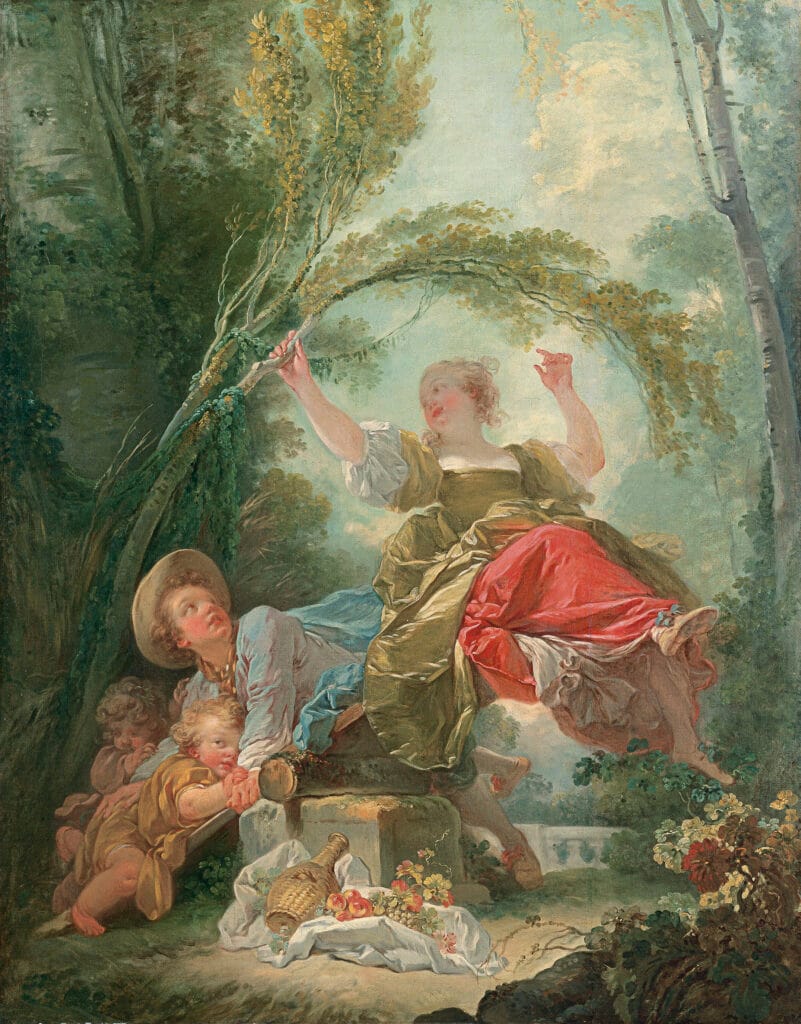
A young woman sits at ease beside a resting lamb, her bare feet on the grass, her hands busy weaving a garland of pink blossoms. Around her lies a basket overflowing with flowers, while a shepherd tends his flock in the distance. The setting evokes Arcadia — a timeless, imagined landscape where nature and contentment meet.
Unlike allegorical or mythic Rococo scenes, The Shepherdess is domestic and personal. There are no gods, no drama — only a gentle rhythm between human and animal, gesture and repose. The lamb nestled at her side suggests innocence; the flowers, fleeting beauty. Through these quiet emblems, Fragonard expresses affection for life’s tender, passing moments.
Composition and Subject Matters
Fragonard composes the scene with an elegant diagonal flow: from the leaning tree at left, through the curve of the woman’s arm, to the golden folds of her skirt. This line draws the eye toward her face, softly illuminated against the shaded foliage.
The color harmony is pure Rococo — pale turquoise, rose, cream, and warm gold — blended with delicate transitions that suggest air and light. Textures vary: the crisp silk of her dress contrasts with the wool of the lamb and the feathery leaves above.
The open sky and distant figure of the shepherd expand the space without disturbing intimacy. Everything — branches, ribbons, and blooms — moves in circular rhythm, echoing the continuous cycle of nature and care.
Style and Technique
Painted in oil on canvas, The Shepherdess reveals Fragonard’s early mastery of lively brushwork and luminous surfaces. His handling of paint is confident yet tender — transparent layers build depth without heaviness.
The pastel palette softens contours and unites figure with landscape. Light flickers across fabrics and flowers, dissolving hard edges into atmosphere. Fragonard’s brush gives form not only to objects but to air itself; the painting seems to breathe.
This refined looseness would later evolve into the exuberant energy of The Swing, but already in The Shepherdess we see his instinct for capturing movement and mood rather than static detail.
Meaning and Interpretation
To eighteenth-century viewers, such pastoral scenes were more than decorative. They represented an imagined purity — a retreat from the complexities of court life. In The Shepherdess, luxury meets simplicity: the heroine’s costly silks disguise her as a peasant, blending innocence with sophistication.
Fragonard’s work reflects the fashionable “return to nature” inspired by Enlightenment ideals, yet it remains joyful rather than moralizing. The painting suggests harmony between humanity and the natural world, between elegance and ease.
Seen today, it conveys something timeless — a wish for calm, beauty, and balance in daily life.
The Shepherdess: Jean-Honoré Fragonard
A soft breeze stirs the leaves; sunlight trembles on silk and skin. She lifts a garland to the air, measuring its curve like a note in a song. Beside her, the lamb sleeps, trusting and still.
Here, color becomes fragrance, gesture becomes calm. The world holds its breath — not in silence, but in peace.
Legacy and Influence
The Shepherdess anticipates Fragonard’s later brilliance. It shows how he could infuse even simple scenes with emotional warmth and visual rhythm.
Pastoral themes like this one flourished across Rococo painting and decorative arts, influencing tapestry, porcelain, and garden design. After the Revolution, tastes changed, but Fragonard’s art regained admiration for its technical mastery and humanity.
Today, The Shepherdess is valued as a gentle emblem of Rococo life — light without frivolity, delicate yet sincere.
More About Artist
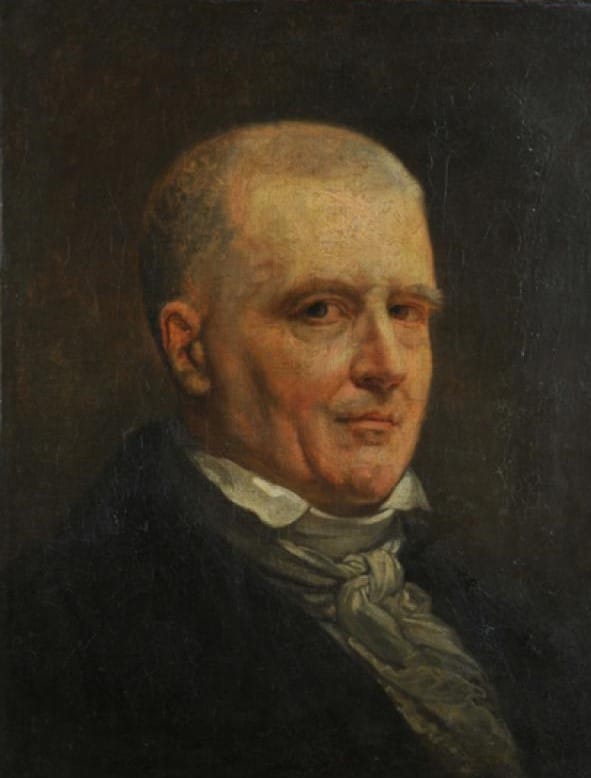
Jean-Honoré Fragonard (1732–1806) was a French painter and printmaker who is considered one of the leading figures of the Rococo art movement. His style is a vibrant and fluid expression of the late Rococo, known for its lightheartedness, sensuality, and free-flowing brushwork. Unlike his contemporary Boucher, whose work could sometimes feel more formal, Fragonard’s paintings have a spontaneous and energetic quality that perfectly captured the spirit of the French aristocracy on the eve of the revolution.
Artistic Style and Legacy
Fragonard was a student of François Boucher, and he inherited his master’s love for mythological and pastoral themes. However, Fragonard’s style is more dynamic and painterly, with a liveliness all his own. His work is characterized by:
- Energetic Brushwork: His brushstrokes are visible and expressive, creating a sense of movement and spontaneity.
- Lush, Luminous Color: He used a rich and glowing palette, with shimmering whites, rose, and gold.
- Playful Sensuality: He often depicted scenes of romantic trysts, playful games, and idyllic moments of love, with a light and often erotic touch.
Fragonard’s art fell out of fashion during the Neoclassical period, which favored more serious, moralizing subjects. He died in obscurity, but his reputation was revived in the 19th century, and he is now celebrated as a master of the Rococo.
Artwork Profile
All of the paintings you mentioned are indeed by Jean-Honoré Fragonard. They are excellent examples of his style and a testament to his genius.
- The Swing (c. 1767): This is arguably Fragonard’s most famous painting and a quintessential work of the Rococo period. It depicts a young woman on a swing, with her suitor hiding in the bushes below, catching a glimpse of her as she kicks off her shoe. The lush, overgrown garden, the playful sensuality, and the charming narrative make it an icon of the era.
- The Lover Crowned (c. 1771-1772): Part of a famous series known as “The Progress of Love,” this painting shows a young woman crowning her lover with a wreath of flowers. The scene is filled with a sense of joyous, unrestrained romance.
- The Musical Contest (c. 1754): An early work from his Italian period, it shows a group of young people engaged in a musical game, demonstrating his early interest in playful social scenes.
- The Shepherdess (c. 1760): A charming example of his pastoral scenes, it depicts an idealized country girl in a beautiful, natural setting.
- Blind Man’s Buff (c. 1750-1752): Fragonard painted a few versions of this popular game. The one in the National Gallery of Art is a lively, outdoor scene full of energy and flirtation.
- The Happy Lovers (c. 1765): A beautiful and tender portrayal of a young couple, it perfectly captures the idealized, amorous mood of his mature style.