

Table of Contents
Overview
In The Little Dressmaker (1858), Pierre-Édouard Frère captures a moment of pure concentration and innocence. A young girl sits quietly by a chair, sewing clothes for her doll under soft afternoon light. Around her lie bits of fabric, scissors, and a small wooden box — humble treasures of her tiny workshop.
Frère’s painting radiates warmth and stillness. It celebrates childhood’s quiet diligence, where play becomes purpose and imagination takes on form. With simple composition and gentle light, he transforms an ordinary domestic corner into a world of care, patience, and love.
No grand gesture, no drama — only the quiet poetry of devotion, stitched one thread at a time.
The Little Dressmaker: A Stitch for Someone Small
A Genre Painting of Childhood Care and Quiet Work –Pierre-Édouard Frère, 1858
Painted in 1858 by French genre artist Pierre-Édouard Frère, The Little Dressmaker offers a tender glimpse into the quiet industry of childhood. Frère, beloved for his heartfelt portrayals of everyday life, invites us into a small, shadowed room where a girl, no more than ten, is hard at work. Her task is simple, but her concentration is deep—she is making a dress for her doll.
The Scene Before Us
The child sits low to the ground, turned slightly away, fully absorbed in her stitching. The light gathers softly around her hands, which hold a piece of pale pink fabric up to the doll’s tiny shoulders. On the worn chair beside her rest scraps of cloth, a thread spool, and other humble tools of her craft. An open box lies at her feet, spilling bits of colored fabric onto the floor like treasures.
There is nothing lavish here—no polished surfaces, no ornate costumes. The plaster wall is bare, the furniture plain. But everything is touched with care, both by the child’s hands and the artist’s brush.
The Deeper Meaning
This is not just a scene of a girl playing. It is a portrait of patience, intention, and tenderness. Frère knew the poetry hidden in small acts—how a child sewing for her doll reflects the gentle repetition of the adult world, how in her tiny efforts are mirrored larger ones: nurturing, providing, imagining.
She is not merely dressing a doll; she is learning how to care. The stitch she pulls is a promise: I’ll take care of you. And so we see in this quiet moment something timeless—the beginnings of responsibility, the forming of empathy, the quiet dignity of even the smallest labor.
A Moment Caught in Time
Time slows in this corner of the world. Nothing rushes the girl. She is not being watched, and yet her work is careful. The stillness hums with quiet purpose. The shadows are warm. The silence is kind. Frère has captured not just a moment of action, but a whole atmosphere—where creativity is not loud, and devotion can be found in a thread pulled gently through cotton.
Artist
Pierre-Édouard Frère (1819–1886) was a French painter best known for his intimate depictions of everyday rural and family life. Born in Paris and trained at the École des Beaux-Arts under Paul Delaroche, Frère became one of the leading figures of 19th-century French genre painting.
He settled in the small town of Écouen, near Paris, where he founded the Écouen School, attracting artists from across Europe who shared his passion for domestic realism and moral storytelling.
Frère’s art focused on the virtues of ordinary people — patience, kindness, simplicity — painted with honesty and tenderness. His works, like The Little Dressmaker, The Reading Lesson, and The Broken Thread, were widely admired across France and England for their warmth and accessibility.
The Painting Story
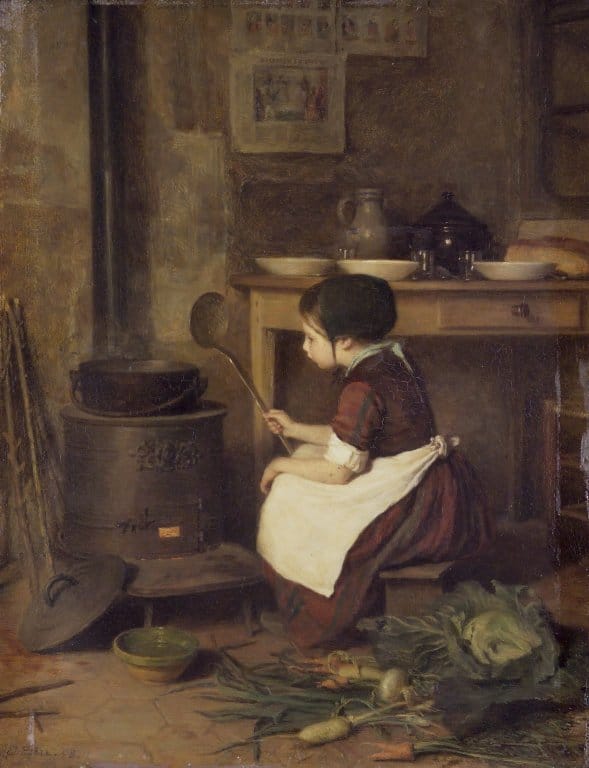
The painting shows a young girl absorbed in her work, seated on the floor near a plain wooden chair. She is mending or sewing a small dress for her doll, which she holds carefully in her lap.
Her expression is one of quiet determination — the kind of focus children show when imagination and effort merge. Around her lie simple tools of creation: a sewing box open on the floor, a scrap of pink fabric, a pair of scissors, and a half-finished garment.
The room is bare but not cold. Light from an unseen window falls softly on her hair and the doll’s white porcelain face. The setting suggests modest means, yet there’s warmth in every tone — the kind of peace found in honest labor and innocent joy.
Artistic Context
Mid-19th-century France saw a turn toward Realism and Moral Genre Painting, where artists like Frère, Jean-François Millet, and Léon Bonnat depicted ordinary lives with sincerity. Against the backdrop of industrial progress and social change, painters found beauty in small domestic virtues — family care, children’s play, and honest work.
Frère’s contribution was gentler than Millet’s solemn peasants or Courbet’s realism. His works dwell in emotional truth rather than social critique. The Little Dressmaker embodies this vision — art as empathy, where beauty lies in patience and care.
For Frère, the home was the moral heart of humanity, and every small act within it — even sewing a doll’s dress — reflected the nobility of everyday life.
Composition and Subject Matters
The composition is simple, intimate, and vertical. The girl sits low, slightly off-center, framed by the chair and wall. This arrangement creates a sense of enclosure — a private space of concentration within a humble interior.
The painting’s balance comes from contrasts: the dark floor and furniture against the girl’s lighter face and the doll’s pale dress. Frère directs the viewer’s eye through diagonal lines — from the box on the floor to the child’s hands and up to her bent head — forming a graceful, triangular rhythm of focus.
The surrounding objects — the small wooden chest, the woven chair, the table — ground the scene in lived reality. Yet their muted tones serve only to enhance the serenity of the child’s act.
Style and Technique
Frère’s style is gentle and precise, using soft realism rather than high polish. His brushwork is fine but not rigid, allowing the textures of fabric, hair, and wood to remain tangible.
He employs a subdued, warm palette: umber browns, muted reds, and soft ochres, all illuminated by delicate natural light. The shadows are tender rather than heavy — conveying calmness, not melancholy.
This restraint makes the painting timeless. The scene feels lived-in, not staged, and the light itself seems to participate in the child’s calm focus. Every stroke contributes to a feeling of quiet presence.
Symbolism and Meaning
At first glance, The Little Dressmaker may seem merely charming, but its meaning runs deeper.
- The doll represents both childhood innocence and maternal instinct — a symbol of care learned early.
- The act of sewing reflects discipline, patience, and creativity — virtues valued in domestic life.
- The solitude of the child is not loneliness but peaceful absorption, the joy of purposeful work.
Frère’s moral is gentle: beauty resides in simple labor done with love. The girl’s concentration mirrors the adult virtues of craftsmanship, making the painting both a portrait of youth and a meditation on timeless values.
The Little Dressmaker – Pierre-Édouard Frère
A child sits alone, yet the world feels full.
Threads cross like thoughts,
and play becomes devotion.
No sound but the whisper of fabric and light.
In her small hands, care takes form —
the art of living begins with love.
More About Artist
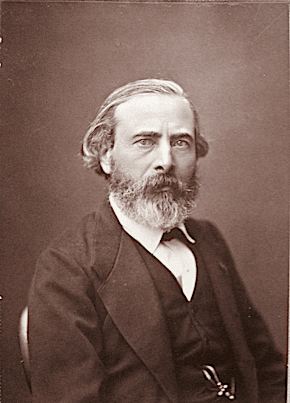
Pierre-Édouard Frère (January 10, 1819 – May 20, 1886) was a leading French genre painter known for his sympathetic and detailed depictions of everyday life, especially of children. Born in Paris, he studied at the École des Beaux-Arts under Paul Delaroche and began exhibiting at the Paris Salon in 1843. Frère spent much of his life in the village of Écouen, where he captured scenes of rural family life with warmth and humor.
Artist Style and Movement
Frère was a realist painter but often categorized under the “sympathetic art” movement in France, which portrayed the lower classes with dignity and charm rather than harsh social criticism. He focused on intimate domestic interiors, workshops, and the little pleasures and troubles of childhood, injecting humor and empathy into his narrative compositions. His style is characterized by delicate brushwork, soft lighting, and an emphasis on human emotion and character’s daily life.
Artwork Profile / Notable Works
- The Little Dressmaker: This painting epitomizes Frère’s tender and empathetic depiction of childhood, portraying a young girl concentrating on her sewing task in a humble domestic setting. It highlights the dignity and innocence of working children and captures a quiet, intimate moment.
- Going to School / Coming from School: These paired works show children in transitions of daily routine, capturing innocence and the rhythms of life in a soft, narrative manner.
- The Little Glutton: His first exhibited picture, portraying a child caught in a moment of childish indulgence, rendered with humor and charm.
- The Exercise: A painting from the John Jacob Astor collection, showcasing domestic scenes with a focus on childhood activities.
- Scenes of Rural and Peasant Life: Frère often painted genre scenes emphasizing the lives of rural families, bringing ordinary moments to art with a sense of universality and compassion.
Pierre-Édouard Frère’s genre paintings remain beloved for their sincere and dignified portrayal of daily life among children and the lower classes. His skilled craftsmanship, combined with a uniquely empathetic eye, helped him become one of the most popular and respected French painters of domestic genre scenes in the 19th century. Frère’s work offers a valuable record of a vanishing way of life infused with human warmth and humor.