
Table of Contents
Overview
Two dogs, two worlds, one truth. In Low Life and High Life (1829), Sir Edwin Landseer tells a human story through canine eyes. Painted as companion pieces, these works pair a streetwise mongrel in a dim stable with an elegant terrier in a gentleman’s study.
Landseer’s genius lies in empathy. He gives both animals dignity—whether surrounded by hay or velvet. Through these mirrored scenes, he transforms dogs into social symbols, exploring class, pride, and shared nobility of spirit.
The contrast is clear yet compassionate: High Life celebrates refinement; Low Life honors endurance. Together, they form one of the 19th century’s most beloved commentaries on Victorian life and character.
Low Life and High Life: Dogs’ Fortune
Low Life and High Life – Edwin Landseer, 1829
Two dogs. Two lives. Two separate paintings — yet forever paired in the heart of Victorian art. In 1829, the young British artist Sir Edwin Landseer painted Low Life and High Life as companion pieces. Though each stands alone on its own canvas, together they tell a quiet, profound story of contrast, class, and shared dignity.
Landseer, beloved for his lifelike animal portraits, gives us no humans here — only two dogs, each waiting in silence. But through these animals, he offers a social mirror, one that still reflects across time.
The Scene Before Us
In Low Life, a white-and-tan bulldog sits at the edge of a dim, rough-hewn space — perhaps a stable or cellar. The floor is strewn with straw. A dented jug rests nearby. The dog, stout and steady, leans into the cool stone with a calm, resigned gaze. His collar is thick, practical. There is no decoration, only duty.
In High Life, a sleek terrier — or perhaps a deerhound — sits at the edge of a richly appointed chamber. Velvet drapes, brass candlesticks, an armchair, scattered papers — every object hints at refinement and wealth. Light pours softly through a leaded-glass window, illuminating the dog’s poised figure. He too waits, alert but composed.
Though the dogs differ, their expressions echo one another. Each waits by a door. Each is loyal. Each holds his place with quiet pride.
The Deeper Meaning
Landseer’s genius lies not in creating contrast for spectacle, but in revealing a deeper truth: that love, devotion, and presence exist in all walks of life. He does not mock the bulldog’s coarse setting, nor does he glorify the terrier’s luxury. Instead, he observes both with tenderness.
These paintings are not just about dogs — they are about people. About Victorian England’s rigid class divide. About the illusion that status determines value. About the quiet nobility of those who serve without fanfare.
That the animals sit without masters in view makes the message clearer still: the dogs are waiting, as we all do — for care, for connection, for someone to return. And in that waiting, they are the same.
A Moment Caught in Time
Though painted on two separate canvases, Low Life and High Life are forever linked. They are often displayed side by side, as Landseer likely intended — a visual conversation about place, power, and spirit.
And while much has changed since 1829, the story these dogs tell has not. We still judge by setting. We still sort by class. But Landseer’s work gently asks: What if dignity lives in both places?
So we look. And we learn — not just about the world of yesterday, but about ourselves.
The Artist
Sir Edwin Henry Landseer (1802–1873) was one of Victorian England’s most admired painters. Known for his extraordinary ability to capture the emotions and intelligence of animals, Landseer rose to fame early and became a favorite of Queen Victoria.
A prodigy trained by his father and the Royal Academy, Landseer blended technical brilliance with storytelling insight. His animals—especially dogs, stags, and horses—often reflected human virtues: loyalty, courage, sorrow, and pride.
By the time he painted Low Life and High Life at just twenty-seven, Landseer had already earned acclaim as both a painter and social observer. His art bridged sentiment and satire, realism and morality, bringing heart and humor to Victorian walls.
The Painting Story
Low Life
In Low Life, a stout, short-haired dog sits in the rough corner of a stable or cellar. A metal pitcher, a broom, and worn stone steps speak of poverty and labor. The dog’s gaze, calm yet guarded, reveals endurance—the quiet pride of one accustomed to hardship.
High Life
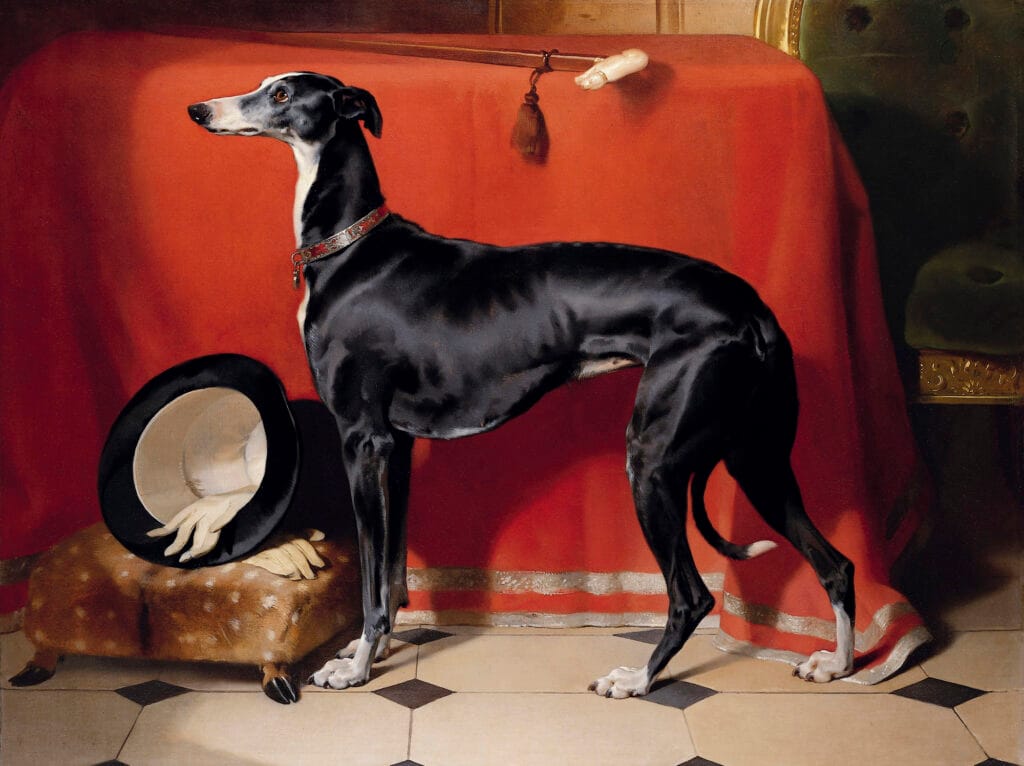
In High Life, a sleek, well-groomed terrier perches in a richly furnished study. Sunlight filters through leaded glass, glinting on polished armor, books, and fine textiles. The dog looks toward the unseen master, alert and confident, surrounded by comfort and culture.
Though the settings differ, both dogs are painted with equal respect. Each sits upright, facing left, embodying devotion in two contrasting worlds—one of work, one of leisure.
Artistic Context
In early Victorian England, class divisions were sharply felt, yet art increasingly sought to bridge them. Genre paintings of the period often reflected social commentary through domestic scenes or allegorical contrasts.
Landseer’s pair fits perfectly within this tradition. By using dogs—a subject accessible to all viewers—he could explore the moral character of both the servant and the master without judgment. The humor is gentle, the symbolism humane.
These works prefigure Landseer’s later fame for combining technical realism with psychological storytelling—traits that made him Britain’s foremost animal painter of the century.
Composition and Subject Matters
Both paintings share a balanced, almost mirror-like design:
- Each dog sits in profile, facing inward (toward each other conceptually).
- Both occupy a solitary interior, their posture dignified and self-contained.
In Low Life, the composition is simple and earthy—dark background, rough textures, a sturdy form outlined by warm light. In High Life, light pours in through stained glass, illuminating the dog’s sleek coat and the surrounding elegance.
By composing them as visual opposites—rough vs refined, shadow vs light—Landseer constructs a subtle dialogue about class and contentment. The symmetry invites comparison but denies superiority.
Style and Technique
Landseer’s technique is meticulous yet expressive. Every hair of the dogs’ coats, every glint of metal or fabric, is rendered with precision, but his true skill lies in emotional realism.
He uses light to define mood: a warm glow softens the roughness of Low Life, while cool illumination dignifies High Life. The contrast between textures—straw, fur, velvet, glass—demonstrates Landseer’s mastery of surface and atmosphere.
The naturalistic tones, delicate brushwork, and tender anthropomorphism mark the beginning of Landseer’s mature style—one that would influence Victorian animal painting for decades.
Symbolism and Meaning
The two dogs represent more than pets—they stand for two halves of society.
- Low Life symbolizes humility, perseverance, and uncomplaining labor.
- High Life embodies refinement, discipline, and loyal privilege.
Yet Landseer avoids mockery. Both are noble in their own ways. The contrast invites reflection: does wealth confer worth, or does character shine regardless of circumstance?
The dogs’ parallel poses suggest equality of spirit. In the end, both live faithfully, each in their own “life.” Landseer’s gentle humor turns into quiet moral wisdom: dignity belongs to the heart, not the household.
Low Life and High Life – Edwin Landseer
Two dogs divided by fortune’s gate—
one by velvet, one by stone—
yet both look on with patient eyes,
untroubled by the world’s design.
In silence they remind us:
class fades, character remains.
More About Artist
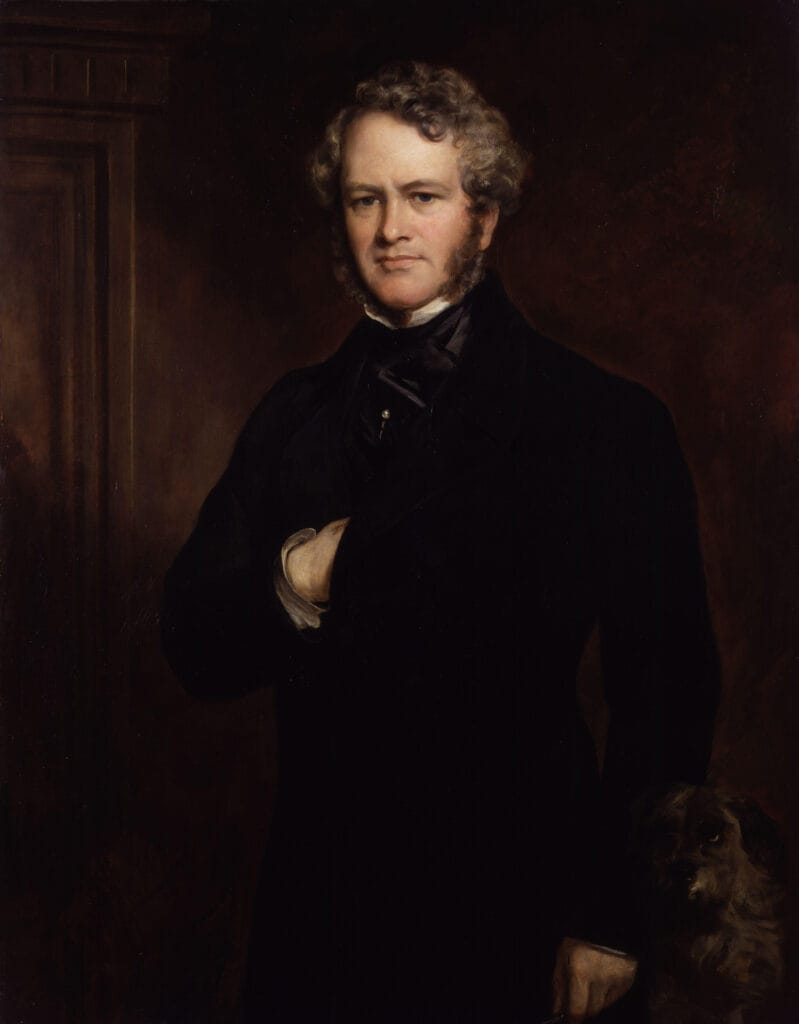
Sir Edwin Henry Landseer (1802–1873) was an eminent British painter and sculptor renowned for his detailed and realistic animal paintings. Born in London, Landseer was a child prodigy who began exhibiting at the Royal Academy by age 13. He became especially famous for his ability to depict animals with expressive, almost human-like qualities, capturing their behavior and emotions with unsurpassed skill. He was a favorite of Queen Victoria, who commissioned works from him and admired his artistry.
Artist Style and Movement
Landseer’s style is rooted in the Romantic tradition with a strong emphasis on narrative and emotional appeal. His paintings often blend realism with sentimentality, especially in his depictions of dogs, horses, and other animals. His art reflects Victorian values and social concerns by using animals as allegories for human virtues and societal commentary. His mastery of detail and texture combined with storytelling made him the leading animal painter of his era.
Artwork Profile / Notable Works
- Low Life (1829): This small oil on wood painting depicts a white and brown terrier guarding his butcher master’s worn belongings in a modest, urban setting. The dog’s scarred appearance and the humble surroundings symbolize the rough life of the working class, using the terrier as a metaphor for loyalty amidst hardship.
- High Life (1829): The pendant to “Low Life,” this painting shows a Scottish deerhound sitting faithfully next to his wealthy owner’s armchair in a richly furnished interior. It symbolizes the aristocratic and chivalrous life. Together, “Low Life” and “High Life” contrast social classes through the portrayal of dogs in different milieus. Both paintings are held by Tate Britain, London.
- The Monarch of the Glen (1851): Among his most iconic works, this painting depicts a majestic red deer stag, symbolizing the Scottish Highlands’ wild beauty and strength.
- The Hunted Stag (1832): A dramatic and emotional forest scene representing the struggle and nobility of the natural world.
Edwin Landseer’s legacy is immense in the tradition of animal painting, where he elevated the genre through his technical mastery and evocative storytelling. His twin paintings “Low Life” and “High Life” remain celebrated for their social commentary and artistic excellence, illustrating Victorian sensibilities and class distinctions with poignancy and artistic finesse. Landseer’s works continue to influence artists and captivate audiences worldwide.ral life and the emotional bonds within families.