
Table of Contents
Overview
Two barefoot boys sit on the ground, sharing fruit with unguarded delight. One raises a bunch of grapes above his open mouth; the other carves a slice of melon, cheeks full, eyes amused. The setting is humble, the moment radiant.
In Children Eating Grapes and a Melon (c. 1650), Bartolomé Esteban Murillo captures not only the playfulness of youth but the dignity of the poor — a subject rare and revolutionary in his time. Painted in Seville, this work belongs to a series of Murillo’s “beggar children,” where tenderness and realism replace pity and judgment.
Bathed in soft golden light, these children embody joy amid scarcity — a testament to Murillo’s deep compassion and to the timeless warmth of human life.
Bartolomé Esteban Murillo, 1650 – A Baroque Genre Painting of Laughter and Hunger
In the golden stillness of 17th-century Seville, Bartolomé Esteban Murillo painted not kings or saints, but children—barefoot, mischievous, and wonderfully alive. In Children Eating Grapes and a Melon (1650), we find no formal setting, no refined clothing, no polished elegance. Instead, we are offered something far more nourishing: life itself, rich with laughter, hunger, and the joy of a simple meal.
Artist
Bartolomé Esteban Murillo (1617–1682) was one of Spain’s greatest Baroque painters and the most beloved artist of 17th-century Seville. While renowned for his luminous religious works, he also pioneered costumbrista (genre) painting in Spain — depictions of everyday people, especially the poor, portrayed with empathy and grace.
Born and trained in Seville, Murillo absorbed influences from Flemish and Italian masters yet developed a style uniquely his own: soft chiaroscuro, golden light, and faces alive with warmth. His genre scenes of street children, fruit vendors, and young beggars — like Children Eating Grapes and a Melon — stand among his most humane creations.
They show that compassion, laughter, and innocence can survive even hardship — a message that still resonates centuries later.
The Story Within the Scene
Two boys, dressed in torn but comfortable clothing, sit together in a dark interior. A basket of grapes lies beside them, overflowing with fruit. One boy, on the left, raises a cluster of grapes above his mouth, laughing as he eats. His bare feet and worn trousers speak of poverty, yet his joy is unmistakable.
The other boy, seated beside him, carves into a ripe melon, holding a large slice in one hand while glancing sideways at his companion. Pieces of rind and seeds scatter across the floor. Despite the rough setting, their faces glow with vitality and friendship.
Murillo offers no background distractions, no symbolic objects beyond the simple abundance of fruit. His focus is entirely human — the universal delight of sharing food, sunlight, and laughter.
Artistic Context
Painted around 1650 in Seville, this work marks Murillo’s mature period, when the artist turned from devotional altarpieces toward scenes of daily life. Spain at the time faced economic decline and famine, and many children lived on the streets.
Unlike earlier painters who moralized poverty, Murillo approached it with charity and tenderness. His young subjects are not symbols of vice or misery; they are children — real, lively, resilient.
This approach was revolutionary. It anticipated later humanitarian realism and influenced artists such as Greuze, Frère, and Bellei, who continued the tradition of painting the humble with affection and dignity.
In Murillo’s hands, Baroque drama gives way to warmth — a gentle realism that honors both hardship and joy.
Composition and Subject Matters
Murillo arranges his figures in a compact triangle, their forms illuminated by a soft, golden light emerging from the shadows. This pyramidal composition, borrowed from Renaissance harmony, focuses attention on gesture and expression.
The fruit — grapes and melon — carries symbolic weight: grapes often represented abundance and joy; melon, the sweetness of life shared. Yet Murillo’s intention is not allegorical but emotional — he paints feeling.
The basket, the torn clothing, the rough floorboards all contribute to realism. But the boys’ relaxed postures, laughing faces, and intertwined actions elevate the scene beyond genre into something nearly spiritual: the sanctity of friendship and simplicity.
Style and Technique
Murillo’s technique unites Baroque chiaroscuro with tender naturalism. His palette is dominated by warm browns, soft creams, and gentle golden tones, creating depth and intimacy.
Light falls diagonally across the children’s faces, giving their skin a luminous softness characteristic of Murillo’s brush. His modeling is delicate, never harsh — edges blur slightly, suggesting motion and breath.
Unlike the theatrical contrasts of Caravaggio, Murillo’s light feels compassionate. It reveals humanity rather than spectacle. In his hands, realism becomes an act of love.
Symbolism and Meaning
While simple on the surface, Children Eating Grapes and a Melon carries deep moral and spiritual undertones.
- The children’s joy embodies innocence uncorrupted by wealth or status — a reminder that contentment is born from companionship, not possession.
- The shared fruit recalls Biblical imagery of generosity and divine provision.
- The light that bathes them can be read as grace — shining equally on the humble and the mighty.
Murillo’s message is subtle but enduring: humanity’s truest wealth lies in empathy, laughter, and shared experience.
Children Eating Grapes and a Melon
Two boys, barefoot kings of the street,
feast on grapes as if on gold.
Laughter spills like sunlight on stone,
and the world, for one sweet moment,
forgets its hunger.
Murillo paints not poverty, but life —
tender, fleeting, whole.
More About Artist
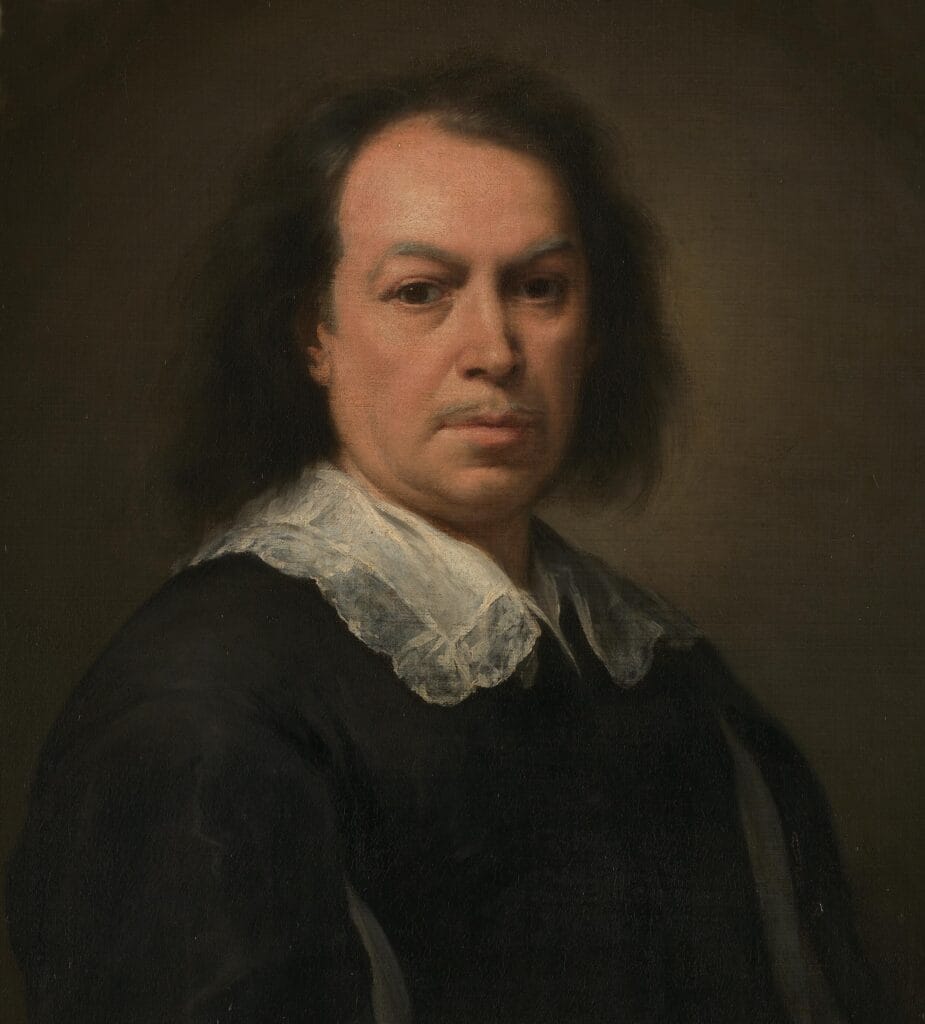
Bartolomé Esteban Murillo (1617–1682) was one of the most celebrated and influential painters of the Spanish Baroque period. While contemporaries like Zurbarán were known for their stark realism and intense piety, Murillo developed a softer, more idealized style that earned him immense popularity, particularly for his tender religious paintings and charming depictions of street life in Seville.
Artistic Style
Murillo’s style is characterized by a “vaporoso” (vaporous or hazy) quality, which is created by his soft, diffused light and gentle brushstrokes. This technique gives his religious figures, particularly the Virgin Mary and the Christ Child, an ethereal and serene quality. His work is also known for its sentimentality and emotional accessibility, making it highly appealing to the public and perfectly suited to the Counter-Reformation ideals of the time.
Unlike many of his Spanish contemporaries, Murillo also excelled in a wide range of subjects. He painted portraits, allegorical scenes, and, most famously, genre scenes of ordinary people, especially children, whom he depicted with an unprecedented sense of dignity and innocence.
Notable Works
Murillo’s extensive body of work includes hundreds of religious paintings and a significant number of genre scenes.
- “The Young Beggar” (c. 1650): This poignant genre painting, now in the Louvre, shows a young boy picking lice from his shirt in a stark, simple setting. The work is a masterful blend of naturalism and empathy, elevating a humble subject to the level of high art.
- “The Immaculate Conception of Los Venerables” (1678): This is one of Murillo’s most famous and beloved religious works. It depicts the Virgin Mary ascending to heaven on a crescent moon, surrounded by a multitude of cherubic angels. This painting became the standard visual representation for the Immaculate Conception for centuries.
- “The Marriage Feast at Cana” (c. 1672): This painting is a testament to Murillo’s ability to combine a religious miracle with a contemporary, human setting. The work depicts Christ’s first miracle, turning water into wine, but Murillo stages the scene as if it were taking place in 17th-century Seville. The figures—including a boy, possibly enslaved, in a rich red tunic—are drawn from everyday life, adding a sense of immediate reality to the divine event. The lavish details of the feast, from the fine silks to the glittering tableware, demonstrate the wealth of the merchant who commissioned the piece.