
Table of Contents
Generative AI and Art
Images can now be produced endlessly.
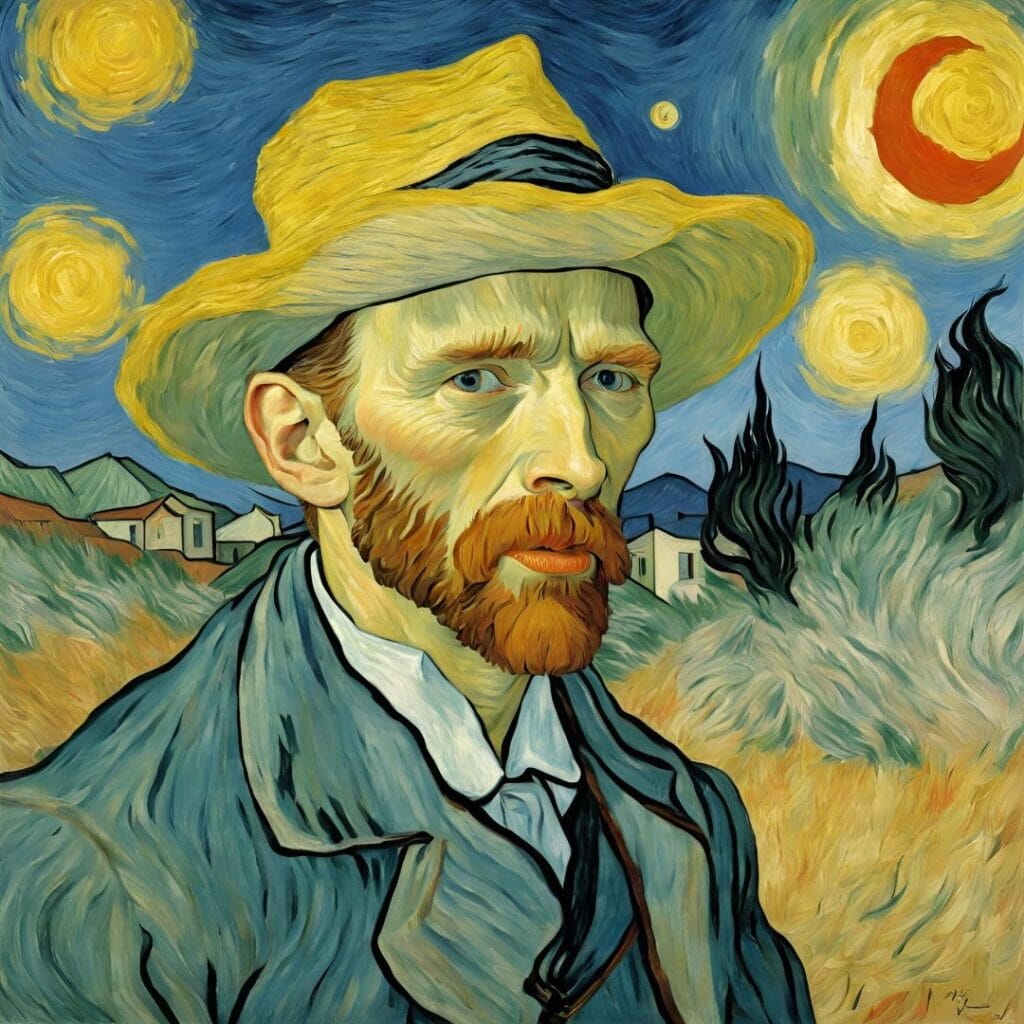
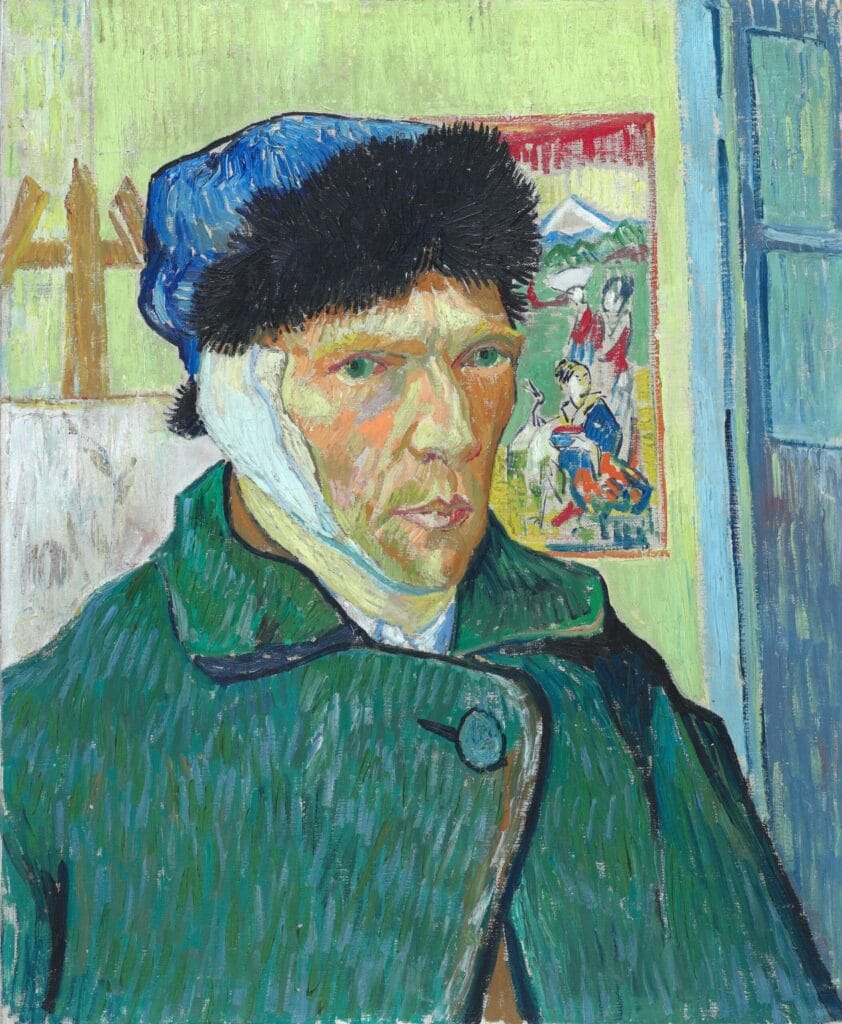
With a few words of prompt, a Van Gogh-level image can appear, claimed instantly as one’s own, without the genius that drove him to hallucination, without the inner conflict, depression, and anxiety that shaped his work, and without the suffering that ultimately ended his life.
What once required time, skill, and personal risk can now be generated in seconds. The visual world has shifted from scarcity to infinite supply. Yet instead of strengthening art, this expansion has exposed a deeper question.
What is art, and why does it exist at all?
The generative AI era is not merely a technological moment. It is a stress test revealing the foundations of artistic value and the conditions required for a creative market to survive.
Art has never existed only as an object.
It exists as a relationship.
A painting, drawing, or sculpture begins with an individual experience, then moves outward toward others searching for meaning within it. What endures is not technical perfection, but shared resonance between creator and audience.
The real challenge is not whether machines can produce images, but whether images alone are enough to sustain art.
What Art Actually Is
Definition
Art is a social expression born from an individual perspective.
A person encounters the world, processes it through lived experience, and translates that encounter into form. The artwork becomes meaningful only when others sense a human presence behind it. Viewers are not simply observing shapes or colors. They are meeting another consciousness.
This exchange forms an invisible agreement between creator and audience.
Art functions because people believe someone, somewhere, felt something first.
The Broken Contract
Art functions as a relational contract.
When audiences engage with a work, they map their own emotions and experiences onto the perceived intent of the creator. This connection requires belief in the authenticity of the source. The audience must sense that a human consciousness stands behind the expression.
Without this belief, the connection fails.
Artist, Artwork, and Social Resonance
The artwork becomes a bridge between individual experience and collective understanding. Success is determined not by refinement but by resonance. Audiences respond to evidence of lived experience, not technical execution alone.
The Generative AI Failure
Generative AI begin from mathematical probability rather than experience.
They assemble images by predicting patterns across vast datasets. The process does not originate from lived memory, risk, or personal urgency. As a result, many viewers sense an absence even when the image appears flawless.
The issue is not quality.
It is origin.
When audiences cannot locate a human starting point, engagement often collapses. The image feels synthetic, not because it looks artificial, but because it lacks perceived intention
Generative imagery fails the definition of art because it lacks the condition required for social resonance.
The Perception of Fraud
This absence produces a specific audience reaction.
The operator of generative tools is often perceived not as a creator but as an intermediary. The audience senses a lack of personal risk and intention. Because the machine has no capacity for experience, the social contract breaks.
The output becomes a synthetic artifact rather than art.
The Generative Art Decline
Markets cannot exist without demand.
Generative imagery has created unlimited supply, yet audience engagement has remained shallow. Novelty does not become culture. The excitement of generation does not translate into sustained attention. The industry is beginning to confront a simple reality.
The ability to generate aesthetic images will not create a market.
The ability to generate highly artistic images will not create a market.
The ability to generate accurate styles will not create a market.
The ability to generate cinematic videos will not create a market.
The ability to generate polished articles will not create a market.
Production alone does not produce value.
A market exists only when an audience chooses to care.
That condition is currently missing.
Supply and Demand
Art has never depended on visual polish.
Edvard Munch’s The Scream, which can be perceived as looking like a kindergarten drawing, achieved enormous cultural power through emotional resonance rather than refinement.
Jean Michel Basquiat’s Untitled (1982) may appear chaotic or primitive to casual observers. Cy Twombly’s works often resemble scribbles or practice marks.
In each case, aesthetic imperfection is irrelevant. Value emerged because audiences encountered human struggle, commentary, and presence.
The audience is not searching for perfect rendering.
Market Ejection
Initial enthusiasm for generative tools was driven by novelty and speed. As novelty faded, broader audiences began withdrawing interest. This rejection appears across creative media, including visual art, film, and writing.
When authorship feels absent, engagement evaporates.
This is not a temporary reaction. It is a structural demand failure.
The Failure of the “Organic vs Synthetic” Analogy
Some predicted that AI art would mirror the organic food market, where synthetic production becomes standard and human creation becomes premium.
The comparison fails.
Food is functional. Art is relational. Consumers may accept a non organic apple because nutrition remains intact. They will not accept a non-human expression when emotional connection is the purpose.
The market is not choosing a cheaper version of art.
It is ejecting the synthetic version entirely.
The Myth of Division: Scale vs Meaning
A popular reassurance has emerged in response to generative expansion. Machines, it is said, will handle scale, while humans will handle meaning.
This idea misunderstands how markets function.
Scale is not neutral infrastructure. Scale shapes attention. When production becomes infinite, visibility collapses. Meaning cannot survive in an environment where signal is buried beneath endless output. The audience does not patiently separate human depth from automated volume. It disengages altogether.
The assumption also falsely divides creation into two independent layers. Meaning is not added after production. Meaning emerges through limitation, effort, and authorship. Remove those conditions, and meaning does not relocate. It dissolves.
A system optimized purely for scale does not create space for human expression. It overwhelms it.
The result is not coexistence, but erosion of the very conditions required for a market to exist.
The Art Fatigue – Dual Death Crisis
The influx of synthetic imagery produced a paradoxical outcome.
The novelty of generated visuals expired while genuine art simultaneously lost visibility.
A Saturated Value Vacuum
Audiences exposed to endless flawless imagery develop fatigue. Visual perfection without emotional depth creates scepticism. Viewers struggle to distinguish genuine labor from automated output.
Value becomes diluted.
The Stagnation of the Original
Human artists now operate within a market where their labor is compared to near zero cost generation. Visibility declines. The individual creator struggles to establish the social contract required for resonance.
Original work enters a period of stagnation.
The Resurrection of the Original
Recovery will take time. The market must purge saturation before distinctions between generated and made can stabilize. Only then can audiences rebuild trust in authorship.
The Migration to Scientific Truth
As demand weakens in artistic domains, generative technology shifts toward environments where authorship is irrelevant.
It moves from expression toward utility.
Technology Survival
This transition does not mark the disappearance of generative imagery. The technology continues to evolve, expand, and integrate into domains where speed, reconstruction, and visualization are primary needs.
What changes is not capability, but position.
Synthetic generation loses legitimacy as art while gaining stability as a tool. In scientific visualization, historical reconstruction, education, and analytical modeling, authorship is not required. Accuracy replaces intention as the measure of success.
The machine does not vanish. It relocates.
The Inevitable Redirection
This shift should not be read as an attack on generative technology. Markets rarely reject innovation entirely. They redirect it.
The resistance emerging in artistic domains functions as feedback. It signals where audiences do not grant legitimacy and where adoption stalls. For technology companies, this is not failure but information, and information arrives early only once.
Continuing to pursue artistic authorship despite sustained rejection risks misreading the signal. Acceptance cannot be engineered through scale, refinement, or persuasion. Repetition does not create creators.
The same systems struggling to gain credibility as artistic authors are already proving effective in scientific visualization, education, reconstruction, and analytical modeling. In these domains, generation aligns with audience expectation instead of conflicting with it.
The opportunity is therefore time sensitive. Redirecting toward domains where trust forms naturally allows the technology to mature into a stable infrastructure. Insisting on artistic legitimacy does not expand the category of art. It reduces the technology to an interface for automated imitation, increasingly perceived as a plagiarism engine rather than a creative medium.
Markets rarely wait for late realizations. The earlier the redirection occurs, the greater the chance for durable adoption.
The Historical Time Machine
Visualizing prehistoric Earth or reconstructing ancient civilizations provides a natural application. No living artist can provide firsthand experience of these eras. The audience accepts machine generation because the purpose is discovery, not expression.
From Stolen Styles to Grounded Data
Training increasingly moves away from scraped artistic styles toward grounded datasets such as archaeological scans, fossil morphology, and documented historical evidence.
The perception of fraud diminishes when output serves explanation rather than imitation.
Documentary as Educational Entertainment
Generative systems become tools for documentary and education. They translate complex data into visible form. Here, the machine does not attempt authorship.
It functions as a processor of knowledge.
The Final Separation
The Resurrection of Human Expression
The generative era did not dissolve the definition of art.
It exposed it.
By attempting to automate expression, the technology clarified what audiences were responding to all along. Art was never the image itself. It was the presence behind it.
As synthetic production expanded, the market did not simply adapt. It hesitated. Attention fragmented. Trust weakened. Viewers began searching again for signals of authorship, intention, and lived origin.
This transition is not a peaceful coexistence between two equal forms. It is a separation of functions.
Generative systems are moving toward domains where authorship is irrelevant and accuracy is primary, science, education, visualization, and technical translation. Art remains where it has always existed, inside human experience and social resonance.
The future of generative imagery is not creative succession.
It is relocation.
And as the synthetic noise settles, the value of the original does not survive because it competes with machines, but because it was never part of the same category to begin with.
Art returns to what it always was. A human signal, addressed to other humans.