
Table of Contents
Painted in 1767, The Swing stands as the quintessential expression of Rococo art — graceful, playful, and full of charm. Jean-Honoré Fragonard transforms a moment of flirtation into a vision of weightless joy: a young woman in a pink silk dress swings through the air, her slipper flying loose as her admirer looks up from below.
The scene is theatrical yet intimate, a dance between motion and light. Every surface — fabric, foliage, cloud — seems alive with laughter. This was the Rococo ideal: beauty without burden, pleasure without consequence.
More than a century later, The Swing remains one of the most recognizable images of 18th-century France, a celebration of elegance and youth that still feels fresh, spontaneous, and human.
A Secret Garden, a Flying Shoe, and a Whisper of Love
Imagine stepping back in time to a sun-dappled garden in 18th-century France. The air is warm, filled with the scent of blooming flowers and the soft rustle of leaves. This is the enchanting world captured in The Swing, painted around 1767 by the brilliant French artist Jean-Honoré Fragonard. It’s more than just a painting—it’s a story, a flirtation, and a playful secret told through color and motion.
A Lady in Flight
At the center of the scene is a young woman on a swing, dressed in a frothy pink gown with white lace—like something from a fairytale. She flies through the air, her silk slipper kicked off in mid-swing, caught in the thrill of the moment. Her smile is bright and carefree. You can almost hear her laughing as she soars through this magical garden.
A Hidden Game
But look closer—this isn’t just an innocent swing ride. Tucked away in the bushes below, a young man gazes up with eager eyes and a mischievous grin. He stretches out, perhaps to catch her slipper or simply to enjoy the secret view her high swing provides. His expression tells us he’s not just admiring the garden—he’s here for her.
Behind the swing, mostly in shadow, is an older man—possibly her husband, guardian, or perhaps even a clergyman. He dutifully pushes the swing, completely unaware of the playful game unfolding just out of his sight. It’s a classic love triangle, filled with secrecy, boldness, and flirtation.
The Spirit of Rococo
Fragonard paints this world with soft pastels and delicate brushwork—hallmarks of the Rococo style, which celebrated romance, elegance, and life’s lighter pleasures. The trees bend gracefully. Flowers spill over urns. Even the stone cherubs carved into the garden seem to giggle along with us. One points toward the flying shoe, as if letting us in on the joke.
This wasn’t a time for serious themes or heavy drama. The Rococo era delighted in beauty, pleasure, and the art of suggestion. Fragonard captures it perfectly—not with a lecture, but with a wink.
The Story Behind the Canvas
According to legend, this painting began as a special request. A wealthy nobleman asked Fragonard to paint his mistress on a swing—being pushed by a bishop, while he watched from below. Though Fragonard may have softened the details, he kept the heart of the idea: a joyful, teasing scene of hidden love.
Why We Still Love It
The Swing isn’t about history or heroism. It’s about the thrill of a glance, the rush of movement, the silliness of a flying shoe, and the sweetness of a summer afternoon. It makes us smile—not just because it’s beautiful, but because it feels alive.
From children discovering art for the first time to adults who’ve seen hundreds of paintings, The Swing never fails to enchant. It invites us to join the secret, laugh at the mischief, and feel the joy of being caught in a perfect, playful moment.
The Artist
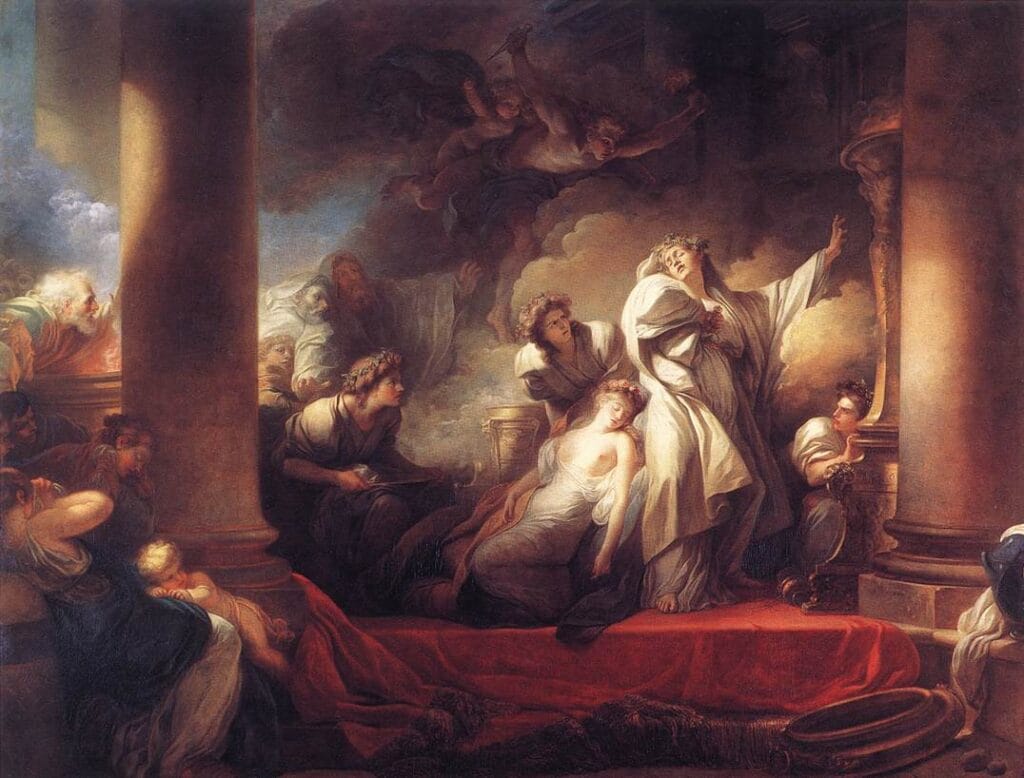
Jean-Honoré Fragonard (1732–1806) was among the last great masters of the Rococo era. A pupil of François Boucher, he absorbed his mentor’s taste for soft color and sensual subjects but infused them with his own energy and wit.
After winning the Prix de Rome, Fragonard spent several years in Italy, where he studied the light and movement of Baroque painting. Returning to Paris, he developed a lively, decorative style that appealed to the private salons of the French elite. His works — often celebrating love, play, and the pleasures of leisure — made him one of the most sought-after artists before the French Revolution.
The Swing was painted at the height of his career, embodying the spirit of an age that prized grace, humor, and the art of enjoyment.
The Painting Story
The scene shows a young woman being pushed on a swing by an older man, while a hidden admirer gazes upward from the bushes. The setting is a lush garden filled with roses, statues, and filtered sunlight. As she swings forward, her slipper slips from her foot and flies into the air — a playful symbol of flirtation and desire.
The story behind the commission adds to its charm. According to 18th-century accounts, a court official originally requested a painting of his mistress on a swing, asking that her lover be placed so as to view her from below. Fragonard accepted the task and transformed what might have been a risqué theme into a masterpiece of elegance and humor.
The result is not vulgar but radiant — a fantasy of love seen through the lens of beauty and grace.
Composition and Subject Matters
Fragonard structures The Swing around a sweeping diagonal of motion, from the shaded lower right to the bright upper left. The young woman’s pink dress becomes the focal point, glowing amid the cool greens and blues of the surrounding foliage. Her movement creates a spiral of light that leads the viewer’s eye through the composition — from the lover below, to her joyful face, to the statues and trees above.
Light plays a central role. Sunlight filters through the leaves, illuminating her figure while the background remains mysterious and shadowed. The statues — including one of Cupid raising a finger to his lips — reinforce the painting’s playful secrecy. Every leaf, petal, and wisp of cloud contributes to the sense of swirling energy.
Despite its apparent spontaneity, the design is exquisitely calculated. Fragonard balances light and dark, motion and stillness, so that the entire scene feels both alive and dreamlike.
Style and Technique
Painted in oil on canvas, The Swing displays Fragonard’s characteristic touch: quick, fluid brushstrokes and a shimmering palette of rose, ivory, and turquoise. His technique captures not just texture but atmosphere — fabrics appear weightless, air seems to vibrate with color.
The brushwork is loose yet confident; forms dissolve at the edges, creating the sense of movement essential to the subject. Fragonard’s handling of light is especially masterful — it flickers across surfaces like laughter itself.
While Rococo painting often favored soft, decorative refinement, The Swing adds a note of vitality. It feels less like a posed tableau and more like a scene caught mid-breath.
Meaning and Interpretation
On the surface, The Swing is a playful romantic scene. Beneath that lightness, it reflects the culture of late 18th-century France — a world of leisure, privilege, and private amusement. Gardens in art often symbolized freedom from constraint; here, nature becomes the setting for flirtation, secrecy, and youthful spontaneity.
The flying slipper and the lover’s gaze suggest sensuality, but the tone remains innocent in spirit. The painting invites the viewer to share in the delight of motion and beauty rather than moralize.
To later generations, The Swing came to symbolize both the charm and the fragility of the Rococo world — a vision of joy that would soon give way to the seriousness of the Enlightenment and the French Revolution.
The Swing: Jean-Honoré Fragonard
The garden shimmers with laughter and leaves. A flash of pink rises through the green, the air catching light like silk in motion. Her slipper sails upward — a moment suspended between play and dream.
Everything breathes in rhythm: the swing, the trees, the pulse of sunlight. In Fragonard’s world, even shadows smile. The scene is over in a heartbeat, yet it lingers like perfume — the very scent of youth remembered.
Legacy and Influence
The Swing became Fragonard’s most famous work and one of the defining images of Rococo painting. Its combination of grace, wit, and sensuality influenced decorative arts, stage design, and later artists who sought to recapture the spirit of pre-Revolutionary France.
In the 19th and 20th centuries, it was admired by Romantic and Impressionist painters for its color and freedom of brushwork. Today, it stands as a symbol of a vanished era — an age that celebrated beauty for its own sake.
Fragonard’s painting continues to inspire contemporary adaptations, from film imagery to digital art, proving that its charm remains timeless.
References and Links
- The Wallace Collection – Jean-Honoré Fragonard: The Swing
- The National Gallery of Art – Jean-Honoré Fragonard Works
More About Artist
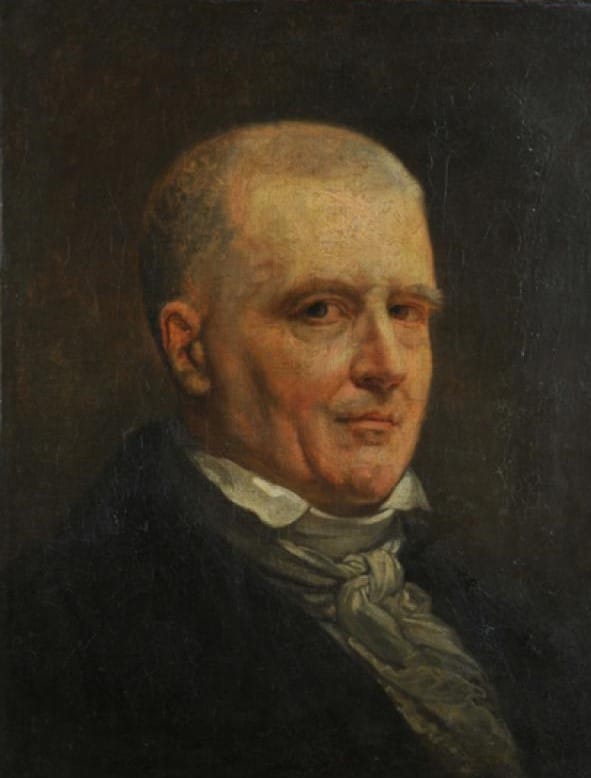
Jean-Honoré Fragonard (1732–1806) was a French painter and printmaker who is considered one of the leading figures of the Rococo art movement. His style is a vibrant and fluid expression of the late Rococo, known for its lightheartedness, sensuality, and free-flowing brushwork. Unlike his contemporary Boucher, whose work could sometimes feel more formal, Fragonard’s paintings have a spontaneous and energetic quality that perfectly captured the spirit of the French aristocracy on the eve of the revolution.
Artistic Style and Legacy
Fragonard was a student of François Boucher, and he inherited his master’s love for mythological and pastoral themes. However, Fragonard’s style is more dynamic and painterly, with a liveliness all his own. His work is characterized by:
- Energetic Brushwork: His brushstrokes are visible and expressive, creating a sense of movement and spontaneity.
- Lush, Luminous Color: He used a rich and glowing palette, with shimmering whites, rose, and gold.
- Playful Sensuality: He often depicted scenes of romantic trysts, playful games, and idyllic moments of love, with a light and often erotic touch.
Fragonard’s art fell out of fashion during the Neoclassical period, which favored more serious, moralizing subjects. He died in obscurity, but his reputation was revived in the 19th century, and he is now celebrated as a master of the Rococo.
Artwork Profile
All of the paintings you mentioned are indeed by Jean-Honoré Fragonard. They are excellent examples of his style and a testament to his genius.
- The Swing (c. 1767): This is arguably Fragonard’s most famous painting and a quintessential work of the Rococo period. It depicts a young woman on a swing, with her suitor hiding in the bushes below, catching a glimpse of her as she kicks off her shoe. The lush, overgrown garden, the playful sensuality, and the charming narrative make it an icon of the era.
- The Musical Contest (c. 1754): An early work from his Italian period, it shows a group of young people engaged in a musical game, demonstrating his early interest in playful social scenes.
- The Shepherdess (c. 1760): A charming example of his pastoral scenes, it depicts an idealized country girl in a beautiful, natural setting.
- Blind Man’s Buff (c. 1750-1752): Fragonard painted a few versions of this popular game. The one in the National Gallery of Art is a lively, outdoor scene full of energy and flirtation.
- The Happy Lovers (c. 1765): A beautiful and tender portrayal of a young couple, it perfectly captures the idealized, amorous mood of his mature style.