
Table of Contents
Overview
The Shulamite: Bridal Procession (c.1882) by John Roddam Spencer Stanhope presents a luminous vision drawn from the Song of Solomon. The bride, clothed in deep crimson and green, steps forward from her house as a group of maidens approaches with gifts of fruit, music, and festivity. The moment is tender yet ceremonial, capturing love as both earthly and sacred.
Stanhope (1829–1908), a key figure of the second generation of the Pre-Raphaelites, was deeply influenced by Italian Renaissance art. His style blended jewel-like colors, symbolic detail, and rhythmic composition. In this painting, he unites biblical allegory with classical harmony, turning poetry into visual pageantry.
Exhibited in Florence in the 1880s, the work resonated with audiences for its richness and allegorical depth. Today, it remains one of Stanhope’s most admired achievements, a lyrical celebration of marriage, devotion, and spiritual longing within the Pre-Raphaelite tradition.
The Artist
John Roddam Spencer Stanhope (1829–1908) was an English painter associated with the later Pre-Raphaelite circle. Influenced by Rossetti and Burne-Jones, he often worked in Florence, where Renaissance art shaped his allegorical style. His paintings frequently drew on mythology, scripture, and symbolism, rendered in luminous color and decorative rhythm. Though less widely known than his contemporaries, Stanhope’s works are celebrated for their spiritual depth and poetic clarity.
The Story Behind the Painting
Inspiration from the Song of Solomon
The biblical Song of Solomon provided the source for Stanhope’s vision. Its verses describe the Shulamite bride and her companions in imagery of gardens, music, and abundance: “Go forth, O daughters of Zion, and behold King Solomon with the crown wherewith his mother crowned him in the day of his espousals.” Stanhope translated this poetry into a timeless scene of procession and greeting.
The Second Generation of Pre-Raphaelites
By the 1880s, the original Pre-Raphaelite Brotherhood had given way to a broader circle of artists who blended its ideals with classical clarity. Stanhope, cousin to Dante Gabriel Rossetti and close to Burne-Jones, exemplified this second wave. The Shulamite reflects their fascination with allegory, spiritual symbolism, and harmonious composition.
Victorian Resonance
To Victorian audiences, the Shulamite’s story carried layers of meaning. She was at once a biblical bride, a symbol of purity, and an allegory of the faithful soul united with the divine. Stanhope’s painting bridged religious meditation with decorative beauty, appealing both to spiritual reflection and aesthetic delight.
Composition and Subjects
The Bride at the Threshold
On the right, the Shulamite steps out from the marble portico of her house, framed by Corinthian columns and climbing roses. Her crimson gown flows over green drapery, her arms outstretched in welcome. She is poised between two worlds — maidenhood and marriage, private life and public ceremony.
The Procession of Maidens
From the left, a procession of maidens advances in rhythmic order. Their robes shimmer in jewel tones of blue, gold, and rose. One carries a basket laden with fruit, another balances a vessel, and a third plays the tambourine. Together they form a living chorus, echoing the biblical verses of joy and abundance.
The Wooden Gate
Between bride and companions stands a wooden gate, both dividing and uniting. It symbolizes the threshold between innocence and union, privacy and community. The figures lean across it, hands outstretched in warmth, transforming a ritual act into human intimacy.
Symbolic Figures
At the center stands a maiden clothed in black, blossoms strewn at her feet. She tempers the joy of the scene, a reminder that love carries both promise and solemnity. Around her, music and gesture embody harmony, making the painting a visual poem of devotion.
Art Style and Techniques
Jewel-like Color
Stanhope employs a radiant palette — deep reds, emerald greens, golden yellows — glowing like stained glass. The contrast of warm and cool tones heightens the ceremonial atmosphere, while the delicate blossoms and drapery shimmer with Pre-Raphaelite clarity.
Renaissance Influence
Living in Florence, Stanhope absorbed Renaissance principles of rhythm and balance. The figures’ frieze-like arrangement recalls classical reliefs and frescoes, yet softened with lyrical gesture. His blend of Italian harmony and Pre-Raphaelite detail creates a composition both timeless and modern.
Symbolism and Allegory
Every element carries meaning: the fruit as abundance, the tambourine as festivity, the gate as threshold, the black-clad figure as reminder of life’s solemnity. These layers turn the painting into an allegory of marriage as both joy and sacred promise.
Legacy and Reflection
Reception and Importance
When painted in the 1880s, The Shulamite: Bridal Procession was admired for its rich symbolism and decorative elegance. It secured Stanhope’s reputation as a painter who could merge allegory with beauty, turning biblical poetry into harmonious art.
Enduring Significance
Today, the painting stands as a hallmark of late Pre-Raphaelitism. It reflects the movement’s enduring ability to weave together literature, faith, and visual splendor. In its blend of ritual and tenderness, it continues to speak of love as both human bond and divine mystery.
A Procession of Love and Song
She steps from the doorway, companions approach with music and fruit, a wooden gate between them, hands reaching across. In The Shulamite: Bridal Procession, Stanhope paints love as both threshold and journey — a vision of devotion, beauty, and eternal promise.ope allows us to glimpse love as both ceremony and mystery — a procession unfolding beyond time.
More About Artist
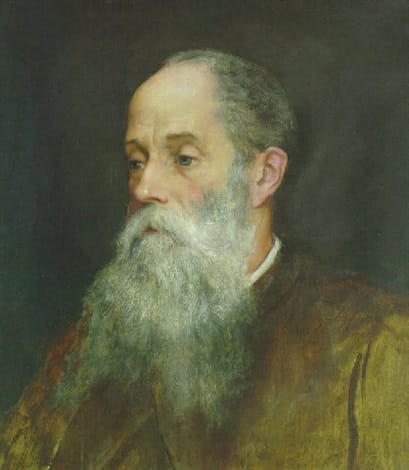
John Roddam Spencer Stanhope (January 20, 1829 – August 2, 1908) was an English artist associated with the second wave of the Pre-Raphaelite movement. Born into an aristocratic family in Cawthorne, Yorkshire, he was educated at Rugby School and Christ Church, Oxford. Despite his privileged background, Stanhope pursued a career in art, training under George Frederic Watts and traveling extensively, including trips to Italy and Asia Minor.
Artist Style and Movement
Stanhope’s work is typically classified within the later Pre-Raphaelite and Aesthetic movements of Victorian art. He worked across various media—oil, watercolor, fresco, tempera—and his subjects ranged from mythological and allegorical themes to biblical scenes and contemporary life. His early paintings featured highly original narrative compositions, which later evolved towards a more symbolic and aesthetic style influenced by broader Victorian artistic trends.
The Pre-Raphaelite Society continues to explore and share the legacy of this remarkable movement.
Artwork Profile
- Thoughts of the Past (1859), his first exhibited painting, depicting a contemplative woman by a window overlooking the Thames.
- The Shulamite: (Pastoral Scene with Lambs) (c. 1878), a serene and lyrical pastoral scene exemplifying his Pre-Raphaelite style.
- The Shulamite: (Bridal Procession) (c. 1882), depicting the procession with rich symbolism and ornate detail, continuing his Pre-Raphaelite themes.
- Penelope (1864), illustrating the faithful wife from Homeric legend in the detailed and expressive Pre-Raphaelite manner.
- Winnowing (c. 1880), portraying agricultural life with symbolic overtones typical of his narrative approach.
- Juliet and Her Nurse (c. 1860), a literary subject rich with emotional and dramatic qualities favored by Pre-Raphaelites.
- Why Seek ye the Living Among the Dead (1870–1899), a powerful biblical scene reflecting later symbolic and aesthetic tendencies.
- Love and the Maiden (1877), a romantic and allegorical composition showcasing his mature style.
- Charon and Psyche (1883), a mythological painting exploring themes of love and the afterlife.
- Pine Woods at Viareggio (1888), a landscape reflecting his time in Italy with delicate naturalism.
- The Gentle Music of a Bygone Day (1873), a nostalgic genre painting evoking memories and emotion.
- The Waters of Lethe by the Plains of Elysium (1880), a symbolic work referencing classical mythology and the afterlife.
John Roddam Spencer Stanhope’s artistic career reflects a rich engagement with the ideals of the Pre-Raphaelites, combined with a move towards aesthetic symbolism in later years. His work, characterized by technical skill and narrative depth, secured him a distinctive place in Victorian art history. Living much of his later life in Florence, he influenced subsequent artists including his niece Evelyn De Morgan, solidifying his legacy as a key figure bridging English Romanticism and Aestheticism.phasize classical virtue and patriotic sacrifice, reflecting the cultural ideals of his age.