

Table of Contents
Overview
A young man stands shyly at the door, hat in hand. Four women fill the room with laughter, glances, and teasing gestures. One leans forward, another raises her arm dramatically, while a third whispers to her friend. The air is bright with humor and anticipation.
In The New Suitor (1906), Eugene de Blaas transforms a simple social moment into a finely choreographed dance of emotion. With his characteristic blend of realism, color, and lively storytelling, he paints the spark of flirtation — the moment before words are spoken, when everything depends on expression and gesture.
It is not just a meeting, but a performance — love, laughter, and curiosity on a sunlit stage.
The New Suitor – Eugene de Blaas, 1906
Painted in 1906 by Austrian-Italian artist Eugene de Blaas, The New Suitor brings us into a lively room filled with gossip, laughter, and fluttering skirts. With the crisp charm of a theatrical scene, de Blaas turns a simple visit into a delightful drama—one where body language tells the story louder than words.
As a painter known for his vivid depictions of Venetian life, de Blaas was a master of gesture and detail. Here, he captures not just an encounter, but an entire mood: playful, conspiratorial, and bubbling with curiosity.
The Scene: Four Against One
A man in a dark hat stands awkwardly in the doorway, half-shadowed and uncertain. He’s the guest—perhaps a stranger, perhaps expected, but definitely observed. The young women in the room have paused their sewing, and all eyes (and smiles) are on him.
One woman leans forward with flair, hand raised in amused greeting. Another cups her chin, elbow perched high, as if whispering a silent opinion. The third gives a knowing grin, while the fourth stands between visitor and audience—her posture somewhere between hostess and accomplice.
They are dressed in bright traditional skirts, their blouses puffed and aprons crisply tied. Colorful, expressive, and theatrical, each figure becomes a note in a visual melody of flirtation and fun.
The Meaning
At first glance, the painting seems light and humorous, but its beauty lies in what it reveals about social ritual and expectation. This is not just about a suitor. It’s about the choreography of courtship, especially in the context of a tight-knit community.
In many parts of 19th- and early 20th-century Europe, visits from potential husbands were formal affairs. Families watched. Friends giggled. Every movement was weighed, every expression noticed. In de Blaas’s world, this social dance becomes art.
The painting also reflects a moment of shifting roles—women at the edge of modernity, still bound by tradition, yet full of voice and spirit.
A Moment Caught in Time
De Blaas doesn’t freeze this moment—he lets it breathe. You feel the motion in the swirl of skirts, the tilt of heads, the clumsy pause of the man at the door. You hear the giggles, see the sparkle in the women’s eyes, sense the electricity of something just beginning.
It’s a painting of curiosity and ceremony, of beauty in everyday life, and of love not yet spoken. By focusing on what’s unsaid, de Blaas invites us to fill in the rest—to wonder, to imagine, and perhaps to smile.
Artist
Eugene de Blaas (1843–1931), also known as Eugen von Blaas, was an Italian painter of Austrian descent, celebrated for his exquisitely detailed depictions of Venetian life. Trained under his father, Karl von Blaas, he developed an academic technique rooted in precision and balance.
Though based in Venice, de Blaas became a favorite across Europe for his vivid scenes of social life — young women at work, families in conversation, lovers in disguise, and townsfolk in playful moments. His paintings, though technically academic, pulse with genuine humanity.
By the time The New Suitor was painted, de Blaas had perfected his style: polished surfaces, luminous color, and subtle humor wrapped in Venetian warmth.
The Story
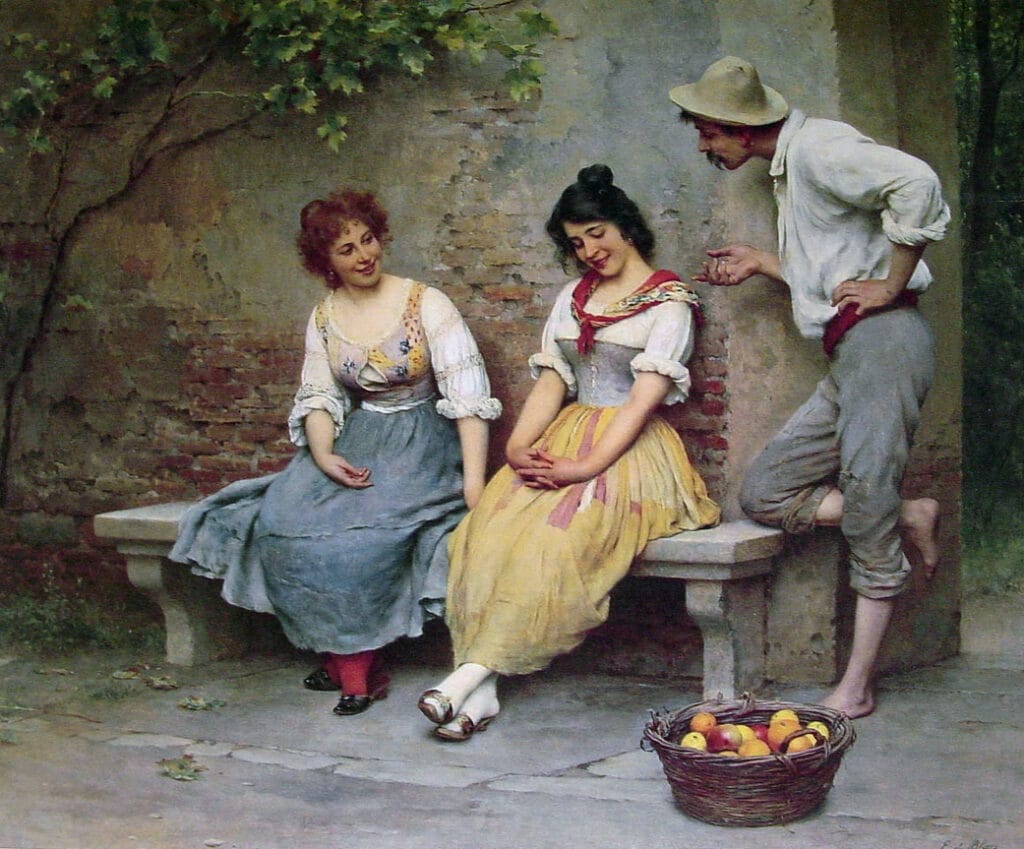
In this intimate room, the drama unfolds with effortless clarity. A young suitor stands hesitantly at the door, his hat removed as a gesture of respect. The women’s reactions form a symphony of amusement and curiosity.
One, seated in the center, raises her hand in mock alarm — perhaps teasing the newcomer or warning her friends of his approach. The others watch with knowing smiles, half hiding their laughter. The woman nearest the door seems to act as a messenger, perhaps the one who introduced him.
The interior is simple but homely — a few wooden chairs, a chest, a mirror, and a carafe on a sideboard. Yet within this humble space, de Blaas builds an entire theatre of social play. Every expression and posture tells part of the story: the curiosity of love, the innocence of humor, the charm of youthful society.
Artistic Context
De Blaas painted during a period when academic realism and genre painting were merging with new interests in color and emotion. While the Impressionists turned outward toward light and landscape, de Blaas and his contemporaries looked inward — capturing the warmth of human connection.
His art belongs to a lineage that includes Francesco Hayez, Gaetano Bellei, and Vittorio Reggianini, all of whom elevated everyday scenes with painterly precision and theatrical flair.
Unlike historical or religious painters, de Blaas focused on the universal: the moments of laughter, flirtation, and social rhythm that define ordinary life. The New Suitor continues this tradition — a microcosm of life rendered with humor and grace.
Composition and Subject Matters
De Blaas arranges the composition like a play in motion. The women form a lively semicircle, their gestures leading the viewer’s gaze toward the open doorway — the literal and emotional entrance of new energy.
The suitor’s dark suit contrasts sharply with the women’s light dresses, drawing attention to his awkwardness and highlighting the collective brightness of the group. The wooden floor and pale walls emphasize the figures’ vibrancy — reds, creams, golds, and soft blues — a palette alive with warmth.
Notice how de Blaas uses hands and glances to narrate the scene: every gesture connects one figure to another, creating invisible lines of conversation that animate the room.
Style and Technique
De Blaas was a consummate academic painter. His technique is precise but never cold, allowing for both texture and tenderness.
His brushwork is smooth and controlled, layered to achieve delicate transitions of tone — from the shimmer of satin to the faint blush of a cheek. Light filters evenly through the room, giving the scene an almost theatrical clarity.
The artist’s gift lies in how he animates realism. Every expression feels spontaneous, every fabric alive with movement. His style bridges the gap between photographic detail and emotional immediacy — a hallmark of late academic mastery.
Symbolism and Meaning
While The New Suitor is rooted in comedy, it also reflects deeper social meanings.
- The open door symbolizes new beginnings — romance entering domestic life.
- The women’s laughter represents the social dance of courtship, where play precedes sincerity.
- The suitor’s humility — hat in hand, eyes lowered — mirrors the etiquette of the era and the balance between boldness and respect.
De Blaas often portrayed women as strong, intelligent, and self-aware — participants, not merely subjects. In this scene, they control the social tone, turning the suitor’s entrance into a communal game.
Secrets and Laughter in the Sewing Room
He lingers at the doorway,
heart in hand, unsure.
They laugh — not cruelly,
but with the joy of knowing
that every love begins
with one uncertain step.
More About Artist
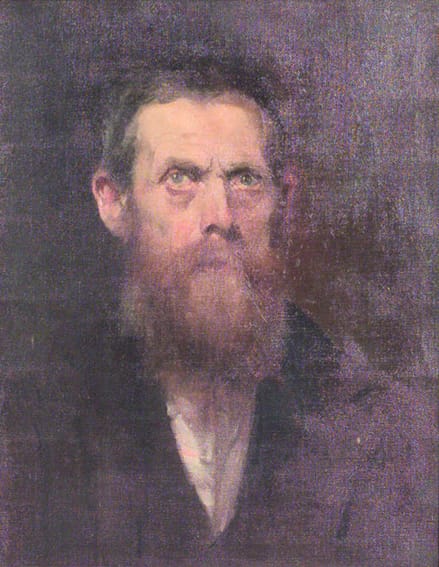
Eugene de Blaas (also known as Eugen von Blaas or Eugenio Blaas) was born on July 24, 1843, in Albano, near Rome, to Austrian parents. He became a prominent Italian painter best known for his genre scenes, especially lively depictions of Venetian society. His father Karl von Blaas, a history and fresco painter, was his first teacher. Eugene studied at the Academies of Rome, Vienna, and Venice, where he later became a professor. He exhibited widely in Venice, London, Vienna, and Munich throughout the late 19th and early 20th centuries.
Artist Style and Movement
De Blaas belonged to the Academic Classicism school but focused mainly on genre painting, characterized by polished craftsmanship, bright color palettes, and theatrical compositions. His paintings often portrayed Venetian daily life, emphasizing flirtation, beauty, and social interaction, frequently featuring women from the fishing communities or aristocratic backgrounds. His style is noted for meticulous detail, especially in textiles, hair, and jewelry, alongside a refined idealization that appealed to the tastes of private collectors and the Grand Tour clientele.
Artwork Profile / Notable Works
- The New Suitor: A vibrant genre scene typical of de Blaas, depicting a young woman in a Venetian setting with a suitor, capturing social nuances of flirtation and courtship typical of his work.
- On the Balcony (1877): Showcases Venetian women engaging in social observation, illustrating his ability to depict both setting and character with lively detail.
- The Love Letter: Represents a secretive and tender moment between young lovers and is exemplary of his romantic, narrative-driven approach.
- The Stolen Kiss: Another flirtatious scene highlighting the playfulness and charm of Venetian social life, rendered with precise detail and polished finish.
Eugene de Blaas remains a significant figure in 19th-century genre painting for his illusive snapshots of Venetian life, combining academic virtuosity with scenes full of charm, elegance, and social intrigue. His works continue to be celebrated for their narrative quality, warm tones, and exquisite craftsmanship, securing his place among the prominent Venetian painters of his era.