
Table of Contents
Overview
Silence fills the small room in The Sick Daughter by Friedrich Eduard Meyerheim, painted in the mid-19th century. A mother sits beside her child’s bed, her hand resting on her forehead, her eyes heavy with worry. The girl sleeps fitfully, her tiny form illuminated by soft daylight from the unseen window.
Meyerheim, one of Germany’s foremost genre painters, transforms this intimate scene into a meditation on love, endurance, and faith. Without sentimentality, he captures the quiet courage of ordinary life — the patience of a mother keeping vigil, the fragility of hope when illness enters the home.
Every detail, from the worn floorboards to the folded linens, tells a story of devotion and simplicity. The Sick Daughter is both painting and prayer.
The Sick Daughter: A Prayer Between Heartbeats
A Genre Painting of Maternal Vigil, Friedrich Eduard Meyerheim, 1808–1879
Painted in the 19th century by German genre artist Friedrich Eduard Meyerheim, The Sick Daughter is a quiet portrait of care, worry, and waiting. Known for his deeply human depictions of everyday life, Meyerheim does not dramatize suffering here—he simply lets us witness it, in its most intimate, domestic form.
The Scene Before Us
The room is small and plain. Wooden floors, rough walls, a dishcloth draped over a cupboard door. A bowl and medicine bottle rest on a bench beside the bed. In that bed, a child sleeps—her face pale, her hands tucked beneath her cheek. Her illness is not named, but her weakness is clear.
Beside her, seated low, is her mother. She leans forward, forehead resting on her hand, her expression a blend of fatigue and fear. In her lap is a small prayer book, held loosely, as if she has read the same line many times without taking it in. The room holds its breath around her. Nothing stirs, not even hope.
The Deeper Meaning
This is not a painting about illness—it is about love. Meyerheim gives us the mother’s burden, the unbearable stillness of waiting, of having nothing left to do but pray. The details are modest—the shelf of plates, the tangle of cloth at her feet—but each one grounds us in the realness of their world. We know this woman, though she has no name. She is all mothers, all caretakers, all those who have sat through sleepless nights listening to a child’s faint breathing, willing it not to stop.
And yet, in her stillness, there is dignity. She is not broken. She waits because she must. She stays because she loves.
A Moment Caught in Time
This is a painting without motion, and that is its power. There is no dramatic climax, no miracle. Just this: the flickering flame of hope in the face of helplessness. The mother’s prayer, the child’s shallow sleep, the worn floor beneath her feet. Meyerheim offers us a sacred pause—a moment when life is held in uncertainty, but not without grace.
Artist
Friedrich Eduard Meyerheim (1808–1879) was a German painter from Berlin, celebrated for his sensitive depictions of everyday life. He came from a family of artists and trained at the Berlin Academy of Fine Arts, where he developed a distinctive blend of academic precision and emotional realism.
Meyerheim’s subjects were drawn from ordinary existence — family scenes, children, and domestic interiors. Yet his brush revealed profound humanity beneath humble appearances. Alongside contemporaries like Adolf Menzel and Ludwig Knaus, he helped define the Biedermeier and Realist traditions in German art.
His works, such as The Sick Daughter, The Farewell, and The Little Seamstress, remind us that compassion and virtue reside most clearly in the simplest settings.

The Painting Story
In a modest, dimly lit room, a mother keeps vigil by her daughter’s bedside. The girl lies pale and still, wrapped in white linen, while a small bottle of medicine and a spoon rest on a nearby table.
The mother leans forward, her brow pressed to her hand in quiet despair. Her other hand holds a small book — perhaps a prayer book or a physician’s note — an emblem of hope and helplessness intertwined. The faint light that falls across her face reveals exhaustion and tenderness.
Behind them, shelves hold simple pottery and a framed print of the Madonna and Child — a gentle reminder of faith and maternal love. The domestic setting speaks not of poverty but of humble respectability, where love is both burden and strength.
Artistic Context
In 19th-century Europe, genre painting moved beyond cheerful domesticity to address moral and emotional truth. Artists began to explore the depth of human experience — love, labor, illness, and aging — with realism and empathy.
Meyerheim’s The Sick Daughter stands at this turning point. While rooted in the Biedermeier taste for home life, it also carries the moral gravity of later Realism. The painting reflects a cultural shift: the sacredness of everyday care, the heroism of the ordinary woman.
Where earlier artists idealized domestic virtue, Meyerheim made it real — unadorned, compassionate, and deeply human.
Composition and Subject Matters
The composition is quietly balanced between vertical and horizontal lines: the bed’s wooden frame, the mother’s bowed figure, the cabinet’s structure, and the soft folds of fabric. This geometry reinforces calm and containment, contrasting the emotional tension within.
The light source — subtle and diffused — falls gently across the mother’s face and the sleeping child, guiding the viewer’s eye toward the heart of the story. Every object contributes to the mood: the small bottle, the spoon, the cloth draped over the table’s edge.
Nothing distracts; every detail is deliberate. Meyerheim creates intimacy not through closeness, but through truth.
Style and Technique
Meyerheim’s brushwork is fine and controlled, characteristic of mid-century academic realism. He uses a warm, muted palette — browns, creams, and soft blues — to create a tone of domestic stillness.
The textures are delicately rendered: polished wood, coarse linen, fragile glass. Yet the painting’s true strength lies in light and posture. The mother’s bent head, the gentle arc of her arm, the stillness of the child — together they form a silent dialogue of love.
This restraint gives the painting its emotional power. Nothing is exaggerated; everything feels observed from life.
Symbolism and Meaning
- The mother’s hand on her brow symbolizes both fatigue and prayer — the moment between endurance and surrender.
- The child’s white bedding evokes purity, innocence, and vulnerability.
- The small medicine bottle stands for human effort; the Madonna image above it for divine mercy.
Through these simple signs, Meyerheim expresses a universal theme: the meeting of earthly care and spiritual hope. The scene becomes not just domestic, but sacred — a quiet act of faith amid hardship.
The Sick Daughter – Friedrich Eduard Meyerheim
The room is still, the world outside forgotten.
A mother waits, counting breaths instead of hours.
Light rests gently on her folded hands —
the weight of love heavier than sleep.
Meyerheim paints not pain, but grace in endurance,
where love keeps watch through silence.
More About Artist
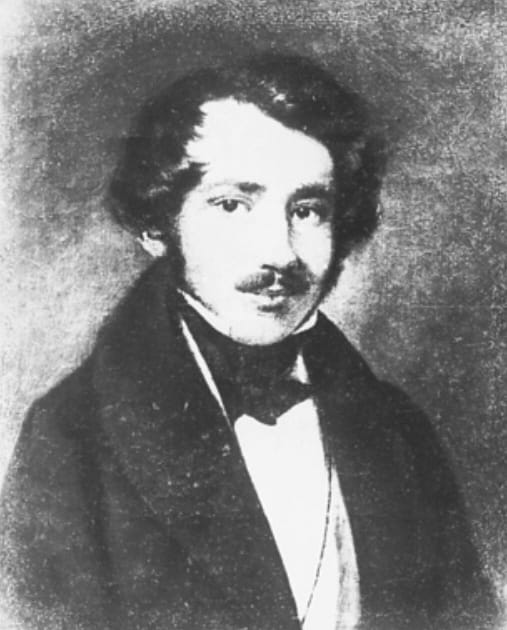
Friedrich Eduard Meyerheim (January 7, 1808 – January 18, 1879) was a German painter known for his detailed genre scenes, primarily focused on bourgeois and peasant life. Born in Danzig (now Gdańsk, Poland), he came from a family of artists and studied at the Prussian Academy of Arts in Berlin. Meyerheim was influential in his time and became a professor and member of multiple art academies, including Berlin, Dresden, and Munich.
Artist Style and Movement
Meyerheim belonged to the Düsseldorf school of painting and worked largely in a Romantic genre style early in his career. He then devoted himself to realistic portrayals of everyday life, often focusing on rural and small-town peasants and their environment in regions like Westphalia, Thuringia, and Hesse. His work is noted for luminous enamel-like colors, detailed compositions, and a sentimental but dignified portrayal of his subjects. Meyerheim combined academic rigor with emotional depth and narrative clarity in his genre works.
Artwork Profile / Notable Works
- The Sick Daughter (Young farmer with her sick child, 1854): This poignant painting depicts a young farmer woman caring devotedly for her ailing child, capturing a tender and intimate moment filled with emotion and realistic detail. It exemplifies Meyerheim’s ability to depict the hardships and humanity of rural life with empathy.
- Westphalian Peasants Hunting Party (1836): Among his earliest major works, this painting was admired for its lively portrayal of rural festivity and was purchased for the National Gallery in Berlin.
- Village Life: Genre scenes depicting the daily activities and social customs of rural communities in Germany.
- Architectural Drawings: Meyerheim also produced numerous architectural sketches of Gothic brick buildings alongside his genre scenes, highlighting his diverse skills.
Friedrich Eduard Meyerheim’s legacy lies in his sensitive and detailed depictions of rural German life during the 19th century, combining academic technique with heartfelt narrative. His paintings provide a window into the customs, challenges, and dignity of peasant existence, securing his reputation as a key figure in German genre painting and the Düsseldorf school.