

Table of Contents
Off-the-Radar
They hang in museum galleries that most people walk past too quickly.
They sleep in collections that rarely make the posters.
They exist in the shadow of louder names, louder legends, louder stories.
The modern world consumes Baroque like a product: a few headline paintings, endlessly repeated. Caravaggio’s knife-edge drama. Rembrandt’s thunderous darkness. Rubens, all muscle and motion.
These icons dominate the public imagination so completely that the era begins to feel small, as if its greatness was carried by only a handful of men.
But the real Baroque was never that narrow.
Away from the famous names, the familiar masterpieces, and the ‘must-see’ lists, there is another Baroque, one that history did not package neatly for us. Paintings with astonishing force, psychological tension, and quiet genius, pushed aside by fashion, politics, museum economics, and plain historical neglect.
Here are ten masterpieces that do not beg for attention, yet reward it more than most. Once you see them, you begin to understand a more unsettling truth. Some of the best Baroque paintings were never meant to be famous.
Why Forgotten?
Are they terrible artworks? Not good enough? No. These works are ‘less famous’ due to visibility, fortune, politics, and museum marketing, not quality.
Many are masterpieces in any serious sense.
Image Quality Note
Each artwork in this edition is prepared using the VERO Optimized Classics standard. We carefully balance tone and colour, reduce scan noise where needed, and apply gentle sharpening so details hold at puzzle scale. The goal is not to ‘modernize’ the painting, but to present it cleanly, faithfully, and beautifully.
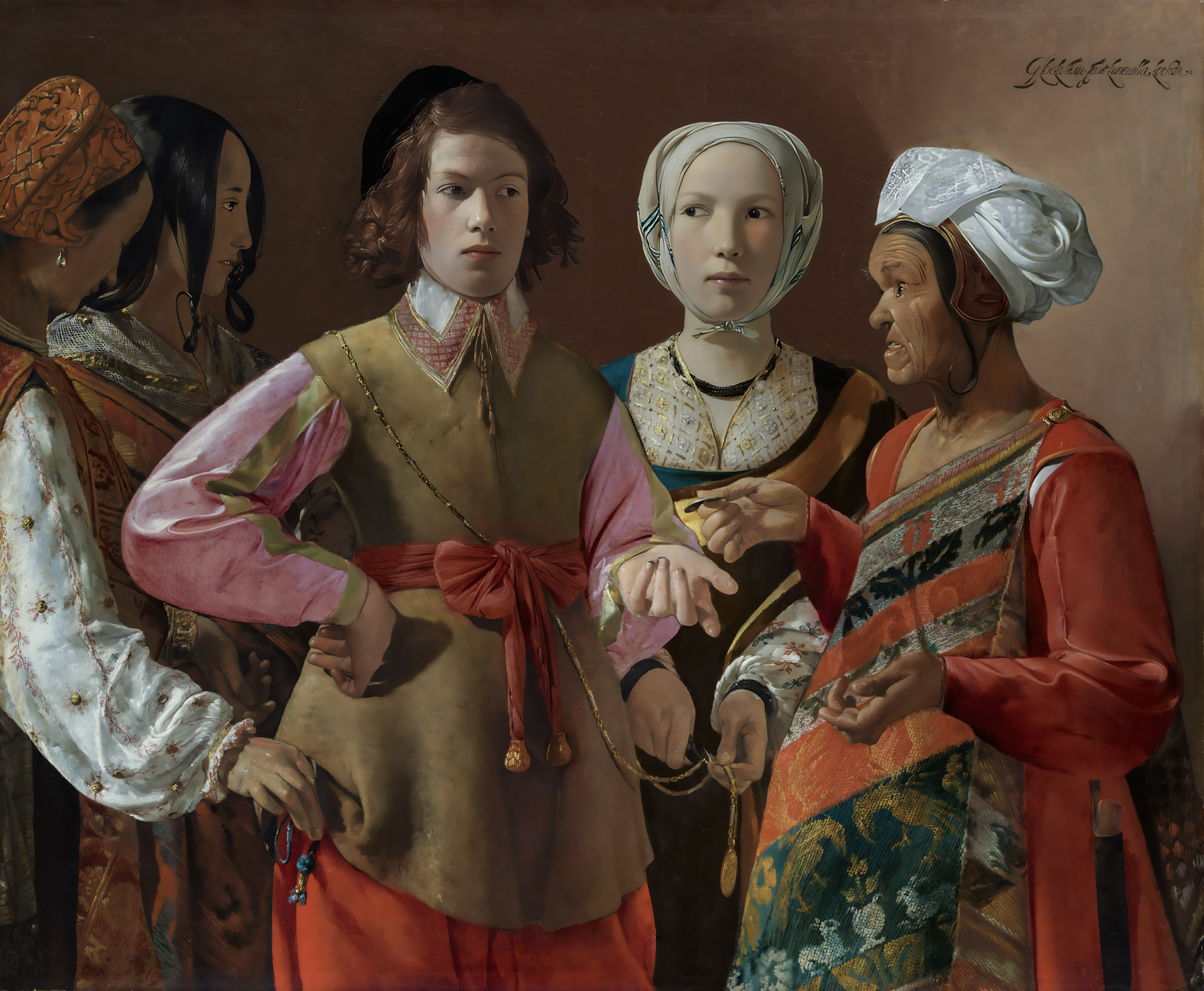
#1 The Fortune-Teller
Key Facts
Artist: Georges de La Tour
Date: c. 1630)
Current location: The Metropolitan Museum of Art, New York
Brief
A well-dressed young man reaches out his hand, hoping for insight, or comfort, or control. Instead, the painting gives him something else: a lesson.
As the old woman reads his palm, the other figures quietly work around him. A purse is lifted, a chain is cut, small thefts performed with the calm precision of routine.
La Tour turns fortune-telling into a moral drama about vanity and vulnerability, and about how easily we give away what is precious when we want to believe
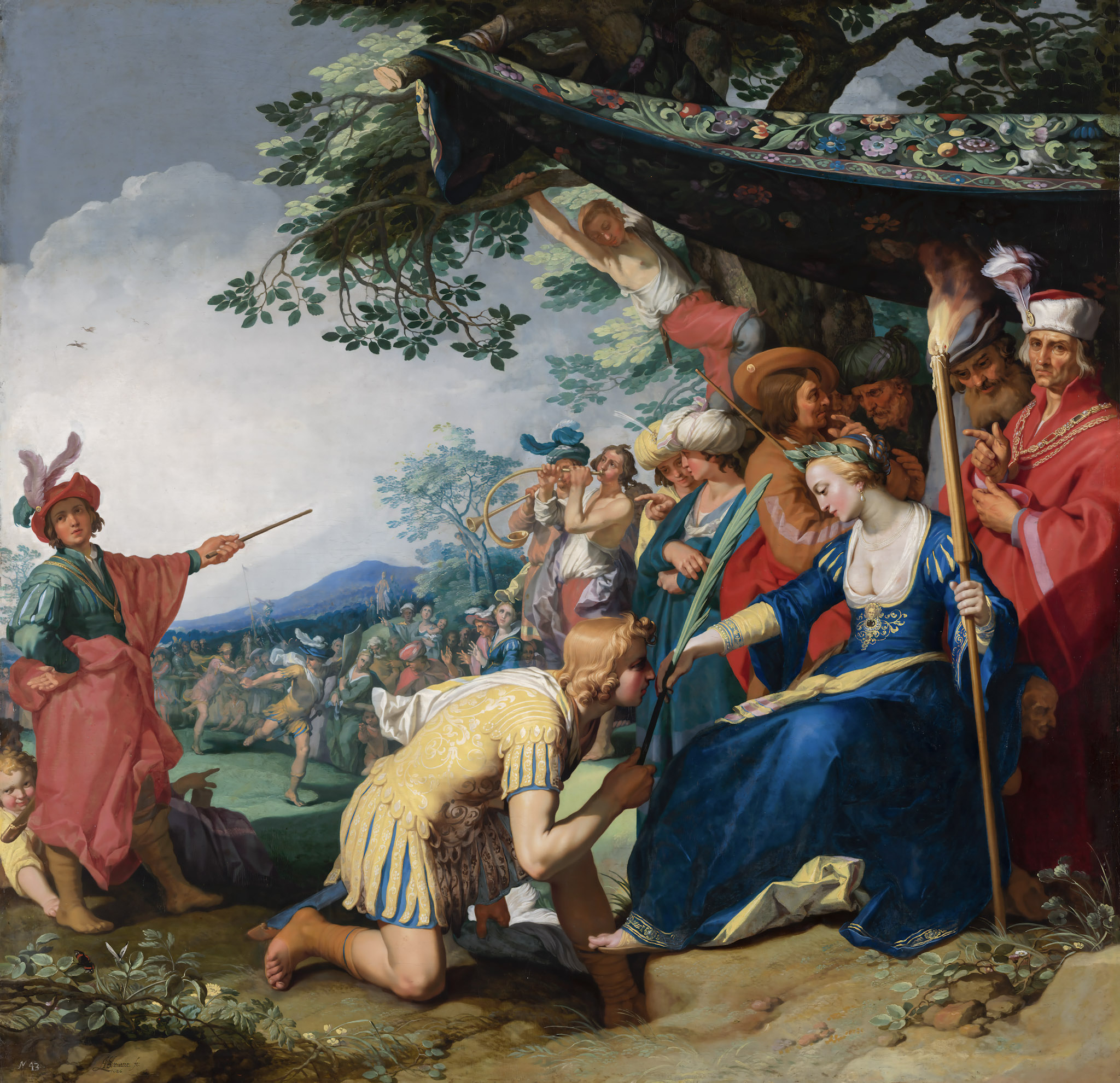
#2 Theagenes Receiving the Palm of Honour from Chariclea
Key Facts
Artist: Abraham Bloemaert
Date: 1626
Current location: Mauritshuis, The Hague (Inventory no. 16)
Brief
In the Greek city of Delphi, a race has been won, and the crowd still seems to breathe with excitement. The victor, Theagenes, kneels to receive a palm branch, the ancient symbol of honour. But this is not really a scene about sport.
Chariclea hands him the prize, and he kisses her hand. The moment turns from ceremony into sudden intimacy. Bloemaert paints the instant when public glory becomes private fate, a courtly allegory of love entering the world disguised as triumph.
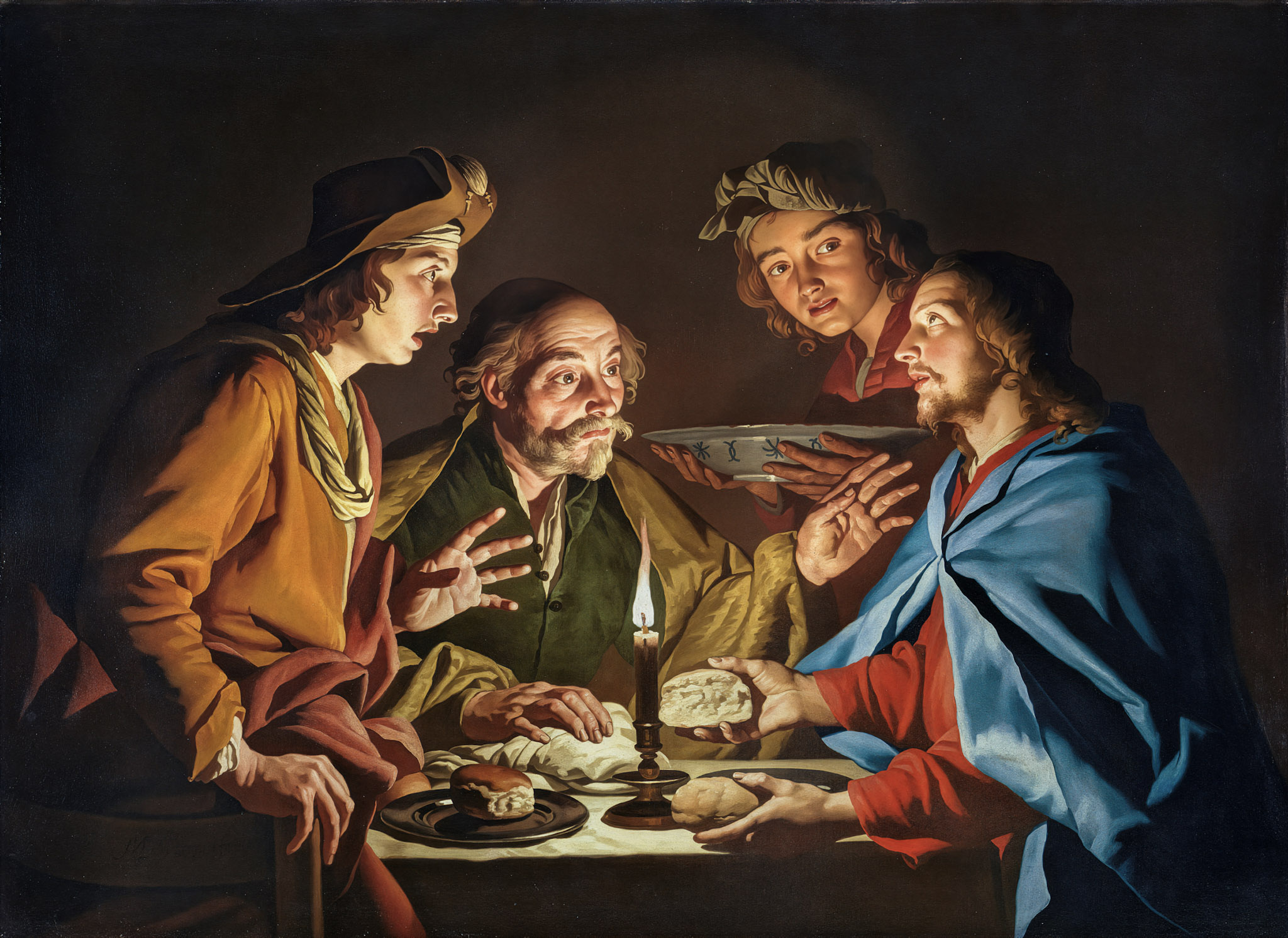
#3 The Supper at Emmaus
Key Facts
- Artist: Matthias Stom (also known as Matthias Stomer)
- Date: c. 1633–1639
- Current location: Museo Nacional Thyssen-Bornemisza, Madrid
Brief
A candle burns at the centre of the table, and the room seems to hold its breath. Three men sit close, caught in a moment that is both ordinary and impossible.
This is the instant from the Gospel of Luke when the travellers at Emmaus finally recognise the risen Christ, not through speech or spectacle, but through the simple act of breaking bread. Stom turns the scene into a quiet revelation. The light is not only illumination, it is meaning, a sign of faith arriving gently, after doubt.
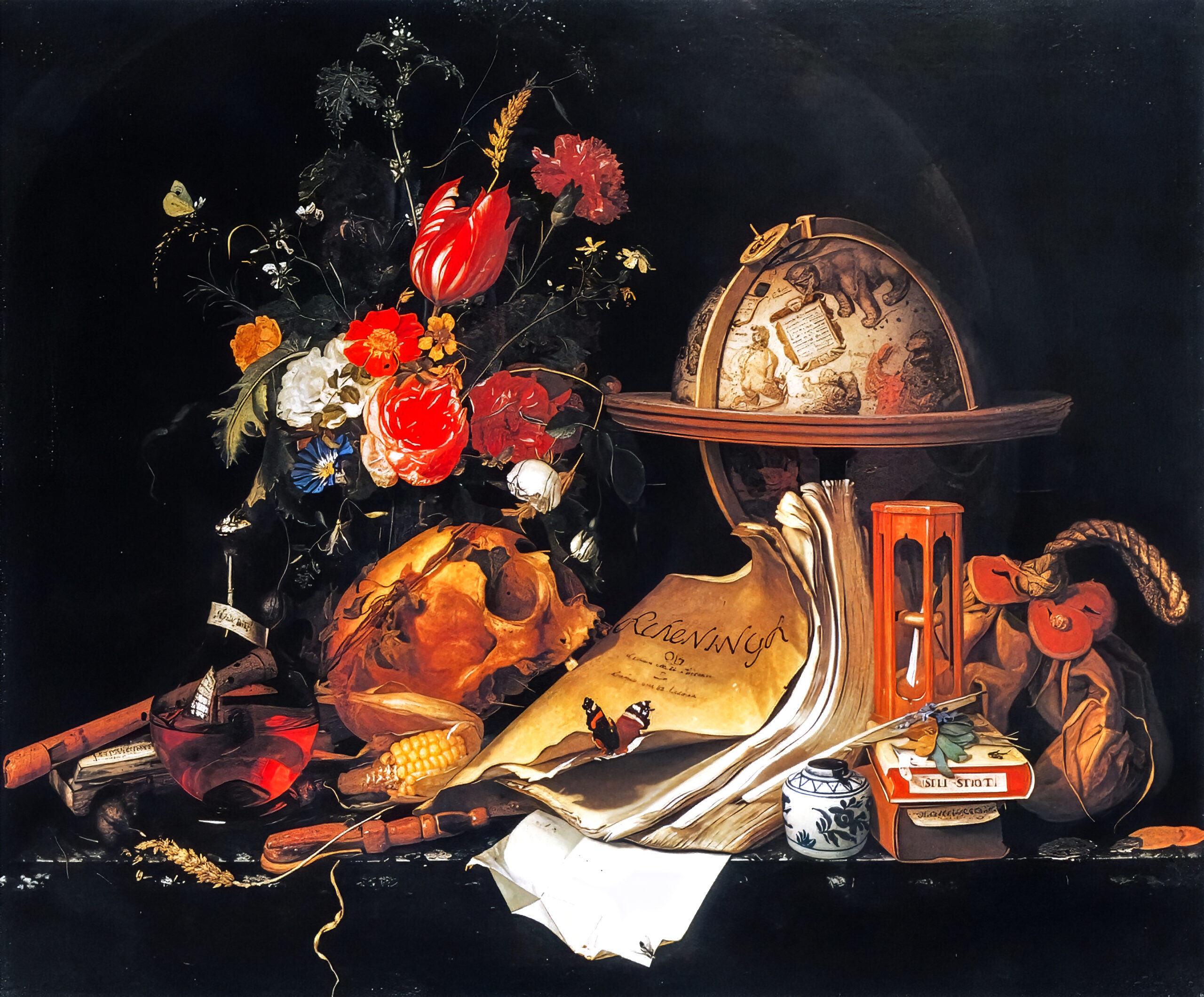
#4 Vanitas Still Life
Key Facts
- Artist: Maria van Oosterwijck
- Date: 1668
- Current location: Kunsthistorisches Museum
Brief
This still life looks lavish at first glance: a globe, a book, a watch, flowers spilling into darkness. But every object is a warning.
A skull anchors the scene, reminding the viewer that time does not bargain. The open pages, the delicate petals, the polished instruments, all stand for life’s achievements, and life’s briefness.
Van Oosterwijck builds the painting like a moral conversation, not a decoration. It is a work about ambition and mortality, and about the quiet truth Baroque art never stopped repeating: everything disappears, except what we choose to live for.
#5 The Calling of Saint Matthew
Key Facts
- Artist: Matthias Stom
- Date: c. 1629
- Current location:Fine Arts Museums of San Francisco
Brief
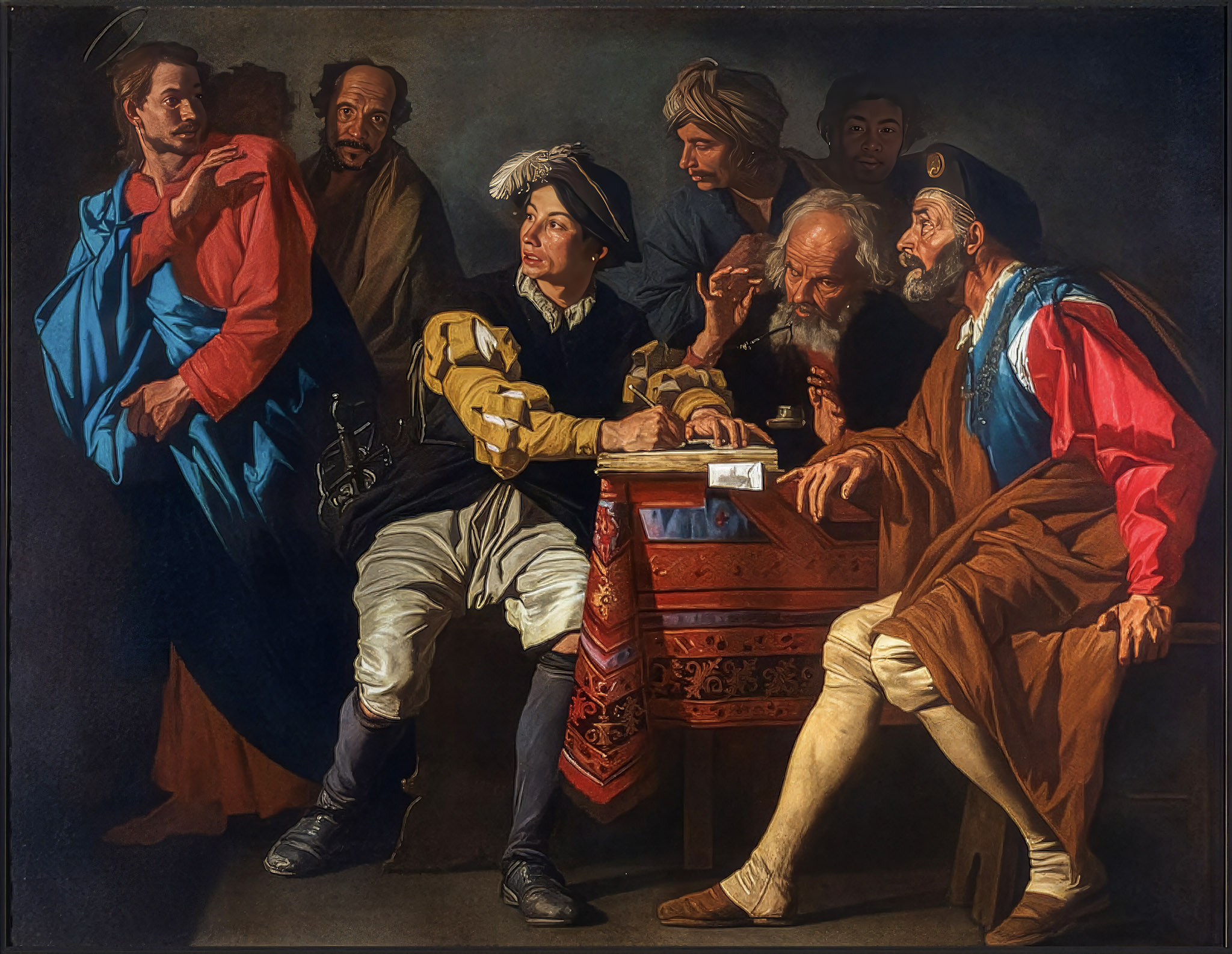
The room is dim, crowded, and tense. A group of men lean in toward the table, caught mid-conversation, mid-decision. Then Christ appears at the edge of the scene, his presence quiet but absolute.
This is the moment Matthew is called. Not with thunder, but with a gesture that cuts through ordinary life like a blade through cloth. Stom stages the story as a human turning point: the instant a man realises his old identity has ended, and a new one has begun.
#6 Scenes of Witchcraft (Morning, Day, Evening, Night)
Key Facts
- Artist: Salvator Rosa
- Date: c. 1645–1649
- Current location: Cleveland Museum of Art, Cleveland, Ohio (series: Scenes of Witchcraft)
Brief
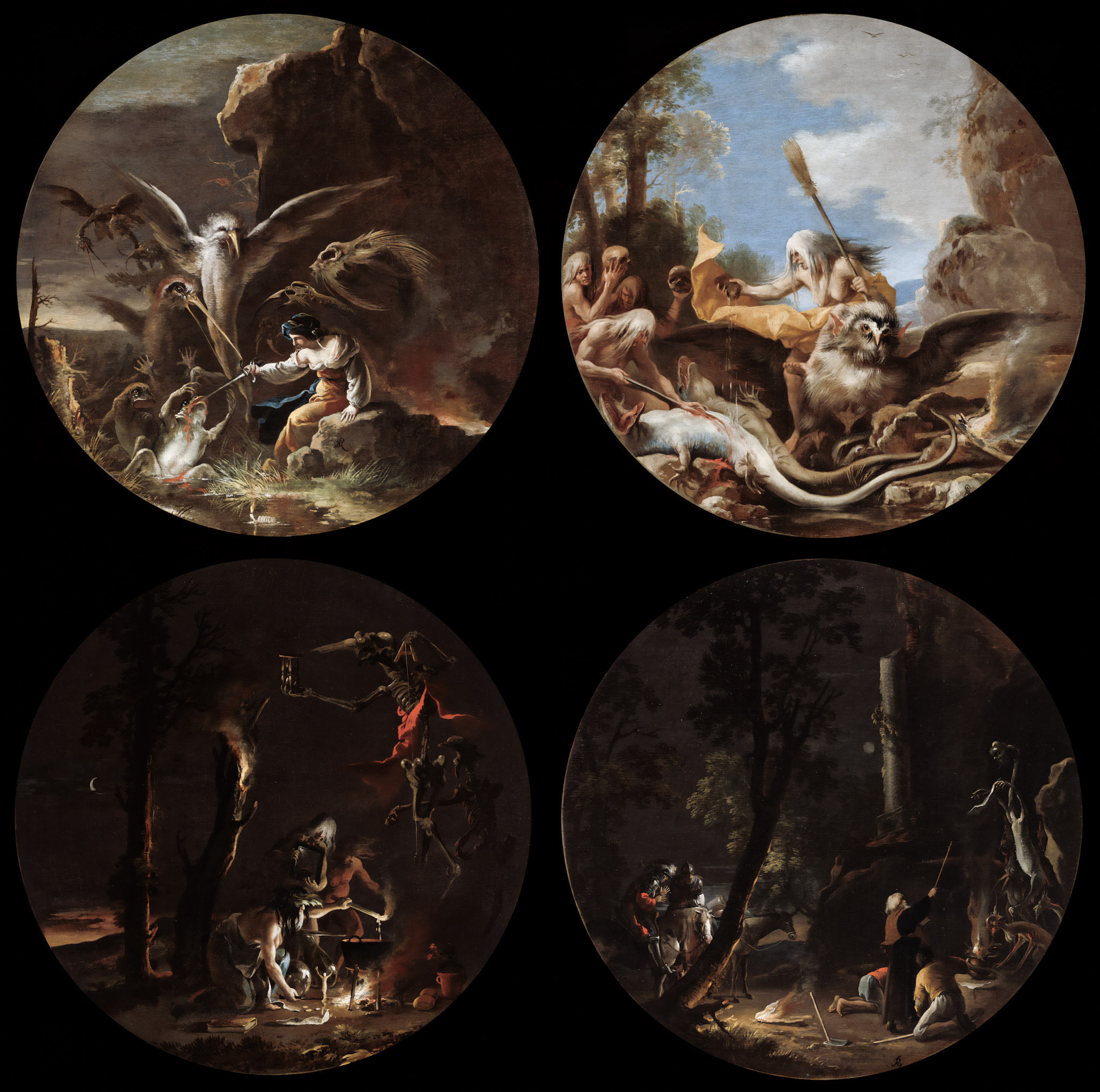
These four circular scenes are not “fantasy decoration.” They are Baroque moral theatre. Rosa stages witchcraft as spectacle and warning, tying the imagery to the passage of time, as if darkness is not only something outside us, but something that arrives on schedule.
The Cleveland Museum of Art notes the artist’s deliberate use of the circle (tondo), referencing the foundational role of the circle in magic.
Morning
A charged beginning, where nature, grotesque creatures, and ritual action collide. The scene reads like the first spark of obsession, when fear is still curiosity.
Day
The clearest, most exposed moment. Violence and absurdity become visible under daylight, suggesting that superstition does not require darkness, it only requires belief.
Evening
The series darkens into preparation and ceremony. A skeleton appears, time itself becoming a character, holding the hourglass like a sentence.
Night
The final descent. The supernatural takes control of the frame, and human figures shrink into shadow, as if the world has been swallowed by its own imagination.
Source: Cleveland Museum of Art, official page: Scenes of Witchcraft (Salvator Rosa, c. 1645–1649
#7 Return of the Prodigal Son
Key Facts
- Artist: Giovanni Francesco Barbieri, called Guercino
- Date: c. 1619
- Current location: Kunsthistorisches Museum, Vienna
Brief
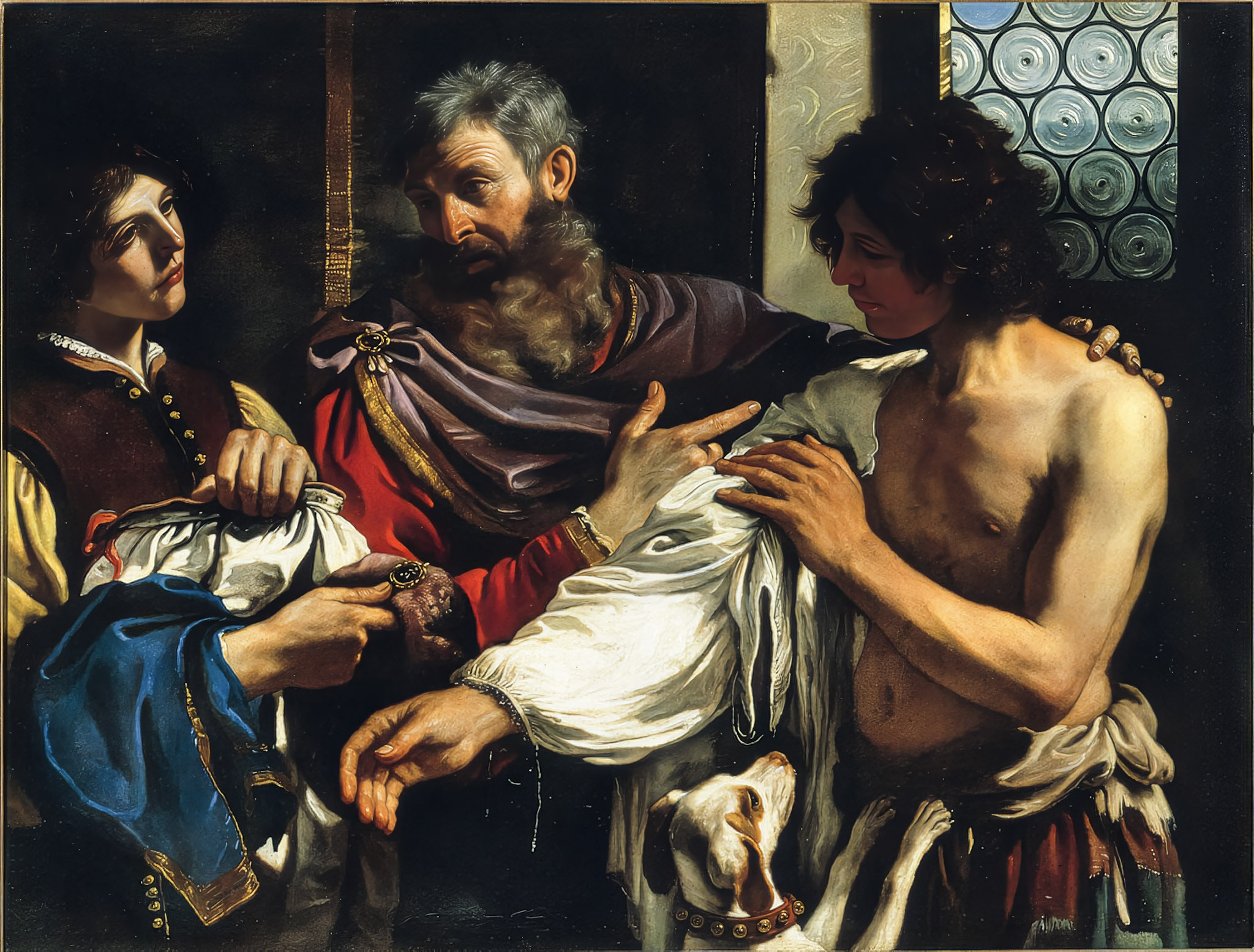
The story is simple: a young man wastes everything, returns in shame, and expects punishment. What he receives is something else entirely.
Guercino paints the parable at its most human point. The father does not lecture. He gestures toward the boy’s torn sleeve, ordering new clothes as an act of mercy made visible. The servant waits with the fresh garment. Even the dog, half-hidden near the son, adds a domestic tenderness.
It is Baroque faith translated into intimacy: forgiveness not declared, but done.
Source: Web Gallery of Art
#8 The Alchemist
Key Facts
- Artist: Cornelis Pietersz Bega
- Date: 1663
- Current location: J. Paul Getty Museum, Los Angeles
Brief
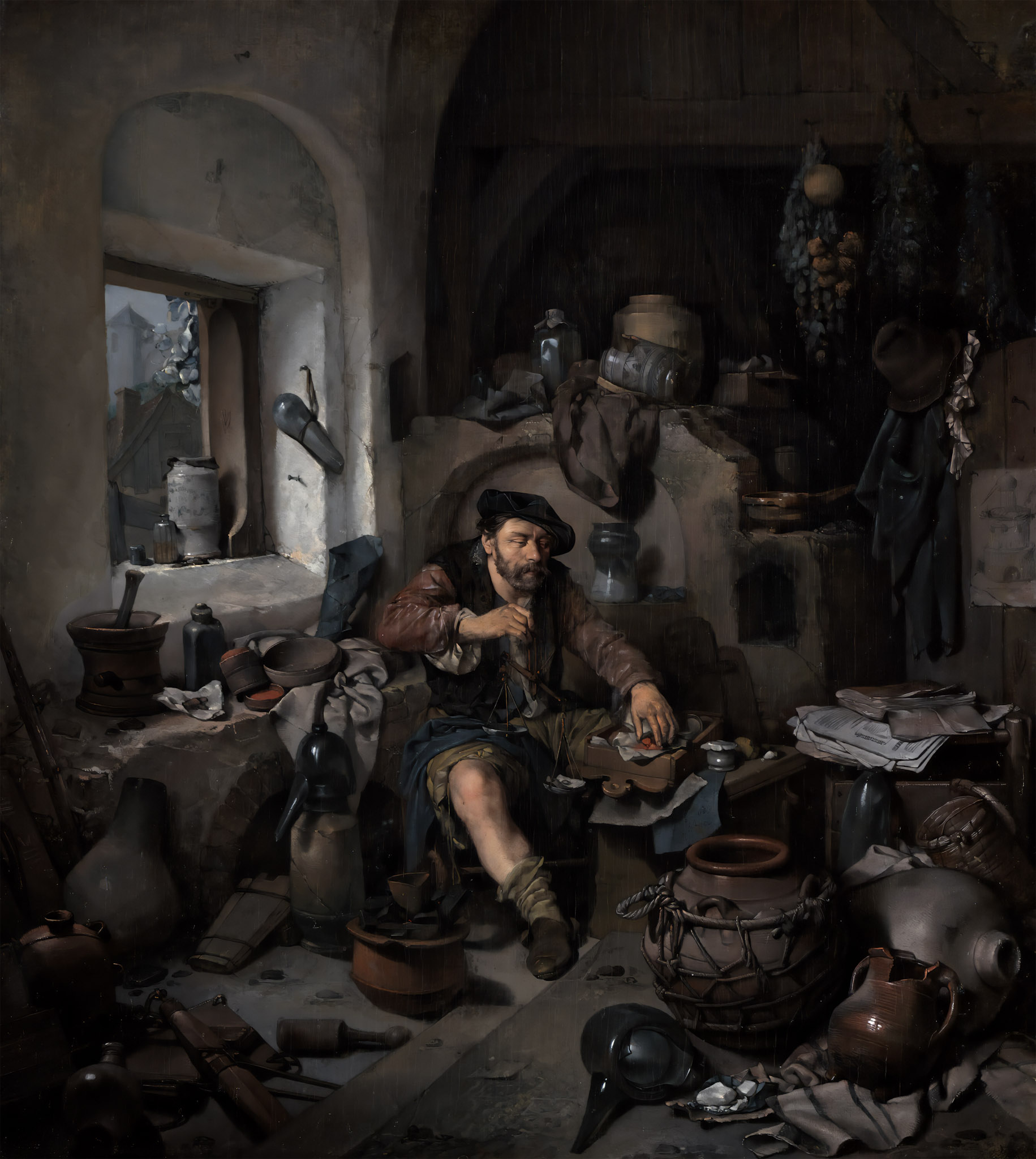
A man sits in a cramped room filled with vessels, powders, papers, and fragile hopes. He measures, heats, stirs, and calculates, surrounded by the clutter of a dream that refuses to die.
On the surface, it is a genre scene, an everyday interior. But the subject carries a deeper warning. The alchemist stands for obsession, for the hunger to turn struggle into miracle, and for the thin line between learning and delusion. Bega does not mock him. He paints him as human, which is far more unsettling.
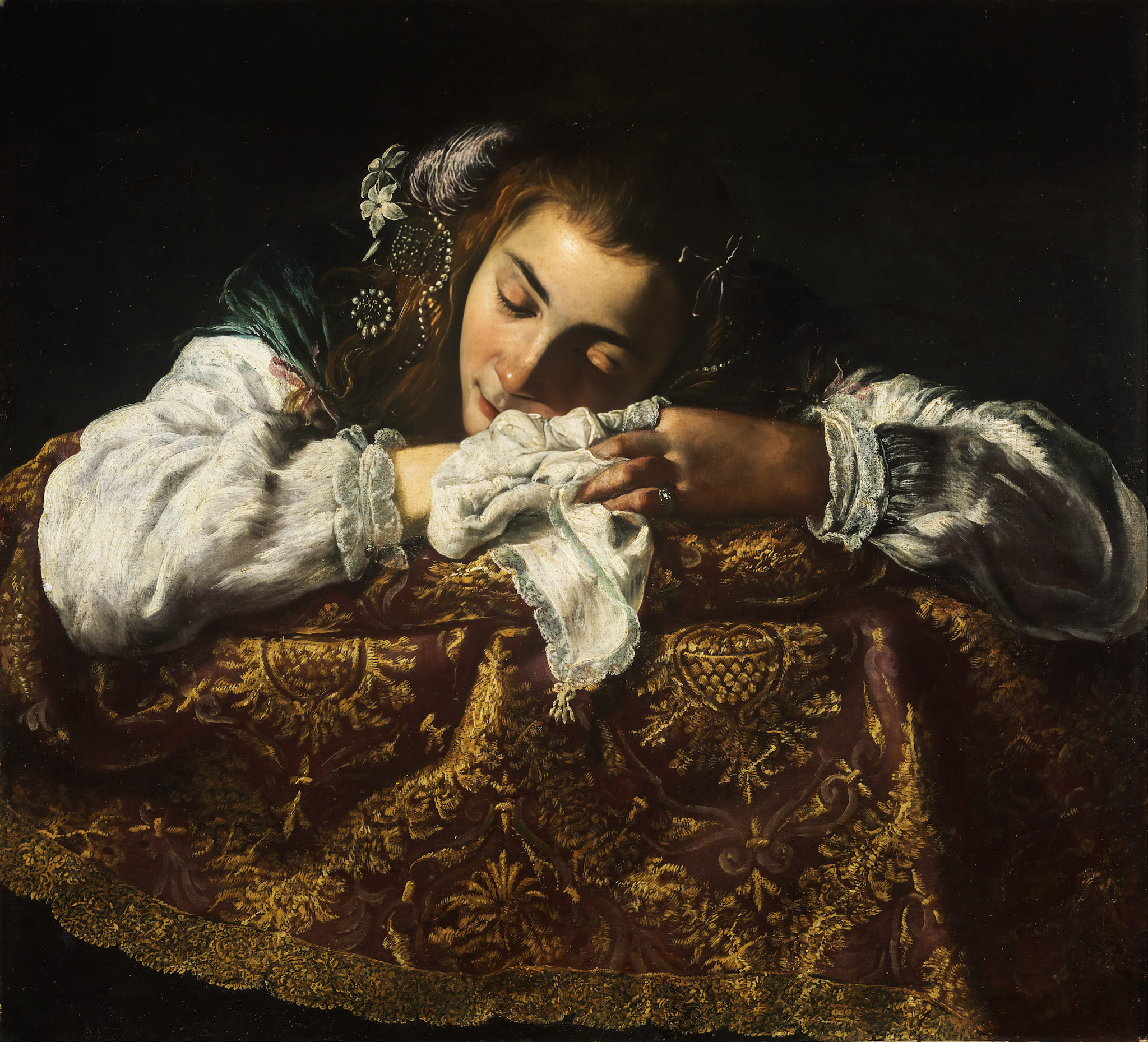
#9 Sleeping Girl
Key Facts
- Artist: Domenico Fetti (attribution debated)
- Date: c. 1620–1622
- Current location:Museum of Fine Arts, Budapest (Szépművészeti Múzeum
Brief
A young woman sleeps with her face turned into folded arms, sealed off from the world by darkness. Nothing dramatic happens, and that is precisely the point. The painting makes stillness feel weighty, like a confession.
In Baroque art, sleep can carry many meanings: innocence, vulnerability, escape, and the fragile boundary between the body and the soul. Here it becomes something even quieter, a human pause that feels almost sacred. The world is loud, yet she remains untouched by it, for one suspended moment.
Attribution Disclosure
The work is securely held and dated by the Museum of Fine Arts, Budapest, but its attribution is not fully settled. The museum has traditionally maintained the attribution to Domenico Fetti, while scholarship has disputed it and some experts have proposed Sigismondo Coccapani instead.
#10 The Lute Player
Key Facts
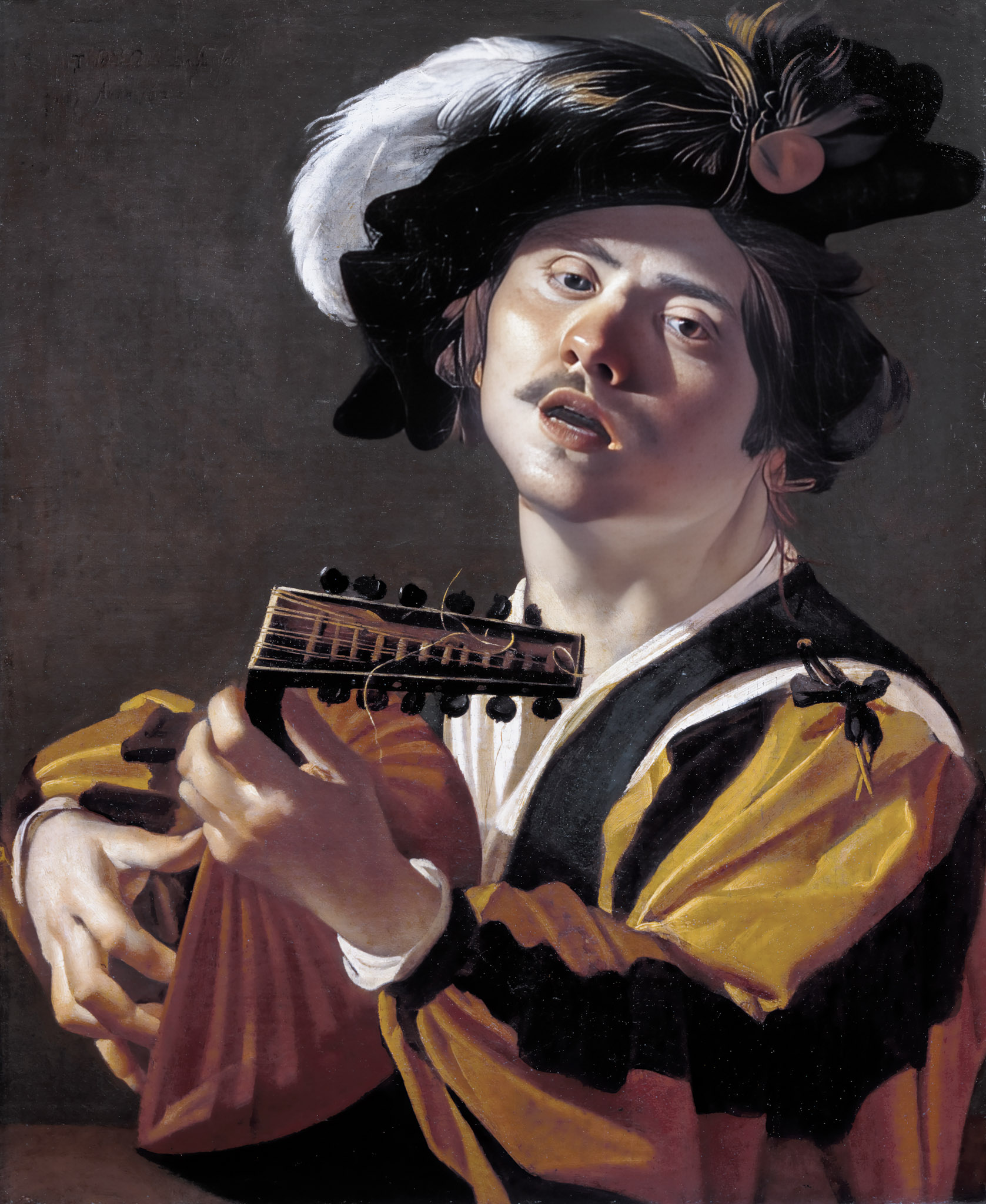
- Artist: Dirck van Baburen
- Date: 1622
- Current location: Centraal Museum, Utrecht
Brief
A young musician fills the frame, mouth half-open as if caught mid-song, fingers poised on the lute. There is no grand setting, no narrative crowd, only the closeness of a face, a hand, and a sound you can almost hear.
This is Baroque realism at its most direct. Baburen makes music visible, turning performance into portrait, and pleasure into something slightly dangerous. The singer’s expression is open, even exposed, as though the viewer has interrupted him. It is a small painting with a large presence, and that is its quiet power.
Missed by the Canon
These ten paintings do not announce themselves. They do not compete for attention with the loudest names in the room. They simply wait, carrying their meaning patiently, as if they know time will eventually circle back.
That is the strange justice of Baroque art. Its best works do not need constant celebration to remain powerful. They survive by force of craft, by depth of feeling, by the human truth they hold inside their shadows.
If this edition does anything, let it do this. Let it widen the era again. Let it remind us that the Baroque was not a small handful of legends, but a vast world of artists, risks, and hidden mastery.
And once you have seen that world, it becomes hard to return to the familiar list of famous names and pretend it was ever the full story.
Suggested Baroque Products
Veer Editions
Veer Issue 6 — Nighten
Veer Issue 4 — Caravaggio
Art Spotlight
The Art of Painting – Vermeer
The Fortune Teller: Caravaggio
Vero Shop
The Cardsharps – Caravaggio – Jigsaw Puzzle with Tin
Supper at Emmaus – Caravaggio- Jigsaw Puzzle with Tin